
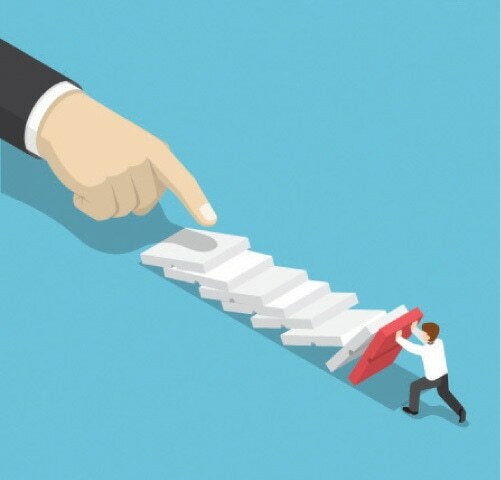
Pakistan’s economic narrative has long been a carousel of temporary fixes, missing targets, and structurally flawed energy policies. Today, the country stands at a critical juncture where bad economic decisions feed into political stability, and political instability, in turn, cannibalizes the economy. To break this vicious cycle, the state must fundamentally shift its focus from penalizing domestic alternate energy to curing the real structural ailments: an uncompetitive export sector, a punishing debt trap, and toxic political polarization.
*The Shattered Dream of 30% EV Market Share by 2030*
The author
The National Electric Vehicle (NEV) Policy laid out an ambitious, green future for Pakistan, targeting a 30% market share for electric vehicles (EVs) by 2030. It was hailed as a dual solution to curb urban pollution and cut down a massive oil import bill. However, that dream has effectively shattered against the wall of reality.
Adoption has stalled because an EV ecosystem can not thrive on a failing power grid. With sky-high electricity tariffs and planned increased in GST from 1% to 18%, the financial incentive for consumers to switch to EVs has evaporated. Furthermore, the broader energy strategy is working at cross-purposes. In a bizarre policy reversal, the government has moved to disincentivize domestic solar adoption—shifting from a 1:1 net metering framework to a much lower net billing buyback rate. This effort to “stop solarisation” to protect old, state-tied distribution companies is actively starving the very distributed, clean energy network required to power an EV transition. Without cheap localized solar power to charge them, EVs simply shift the import burden from oil to expensive liquefied natural gas (LNG).
*High Costs and a $35 Billion Trade Deficit*
Pakistan is wrestling with a staggering trade deficit that hovers around the 35 billion USD mark. The root cause is not a lack of industrial drive, but the fact that the state does not offer the ease of doing business or the necessary incentives for exporters to compete globally.
The cost of doing business in Pakistan is estimated to be roughly 34% higher than regional competitors like Bangladesh and Vietnam.
Exporters face a fatal combination of complex regulatory red tape, high inflation, and globally uncompetitive energy rates. When the inputs to create a product cost more than the price at which a regional neighbour can sell it, export markets shrink. Instead of subsidizing and clearing the path for manufacturing hubs, taxpayers’ wealth is siphoned into unproductive sectors, leaving a massive gap between what the country sells to the world and what it buys.
The government must stop producing expensive energy through imported LNG. For years, the state has injected taxpayers’ money into maintaining state-owned LNG-run power plants. This is an economic black hole. Buying fuel in dollars to sell electricity in depreciated rupees is a guaranteed path to insolvency.
Rather than continuously throwing good money after bad, the government should write off these government-owned LNG-run plants. The capacity charges and operational losses generated by these facilities act as a permanent tax on the entire economic machinery. Transitioning away from these expensive thermal liabilities is the only way to permanently lower the baseline cost of electricity for both citizens and industries.
*Curbing Luxury and Moving Beyond the IMF*
True economic sovereignty requires shifting concentration toward structural adjustments that eliminate external dependencies:
Pakistan should implement strict measures to compress the import of non-essential luxury items. Scarce foreign exchange reserves should not be squandered on premium consumer goods while industries struggle to import raw manufacturing materials.
The focus must pivot heavily toward dollar inflows. This means offering direct fiscal incentives to exporters, simplifying foreign exchange compliance for IT freelancers, and making it frictionless for overseas Pakistanis to channel remittances into productive industrial investments rather than speculative real estate.
Pakistan has entered dozens of programs with the International Monetary Fund (IMF), yet the historical truth remains unaddressed: the IMF has not successfully brought any country out of an economic crisis through standard bailout packages alone. IMF structural adjustments rely primarily on regressive taxation and raising primary tariffs—measures that crushes the local industry and the middle class while protecting the state’s elite expenditures. A bailout is an addictive painkiller, not a cure. The cure is structural productivity.
The conomic policies do not exist in a vacuum; they require a stable political bedrock to succeed. The ongoing polarization within Pakistan has hyper-politicized basic economic decisions, leading to policy flip-flops with every change of administration. This political tension fuels domestic security issues, which acts as an absolute deterrent to foreign direct investment (FDI) and long-term domestic capital deployment.
Efforts must be made for national depolarisation. Reducing political toxicity is no longer just a social preference—it is an economic imperative. When political tension is dialled down, policy predictability returns, and security concerns naturally ease. Only a stable, less polarized environment can restore investor confidence, allow the state to focus on long-term growth over day-to-day survival, and consequently boost the economy back toward sustainable growth. (The Opinions expressed in this article are not necessarily the view point of WNAM)