
WNAM MONITORING: Long renowned for its imperial heritage, distinctive cuisine and tranquil beaches, the central city of Hue is increasingly attracting visitors seeking places to restore their physical and mental well-being, which positions wellness tourism as a promising new growth driver for the locality.
The shift reflects a broader global travel trend, with wellness experiences becoming an increasingly important factor in destination choice. Recognising this opportunity, tourism businesses, hotels and resorts in Hue have begun developing products that combine relaxation therapies with local culture, traditional medicine and nature-based experiences.
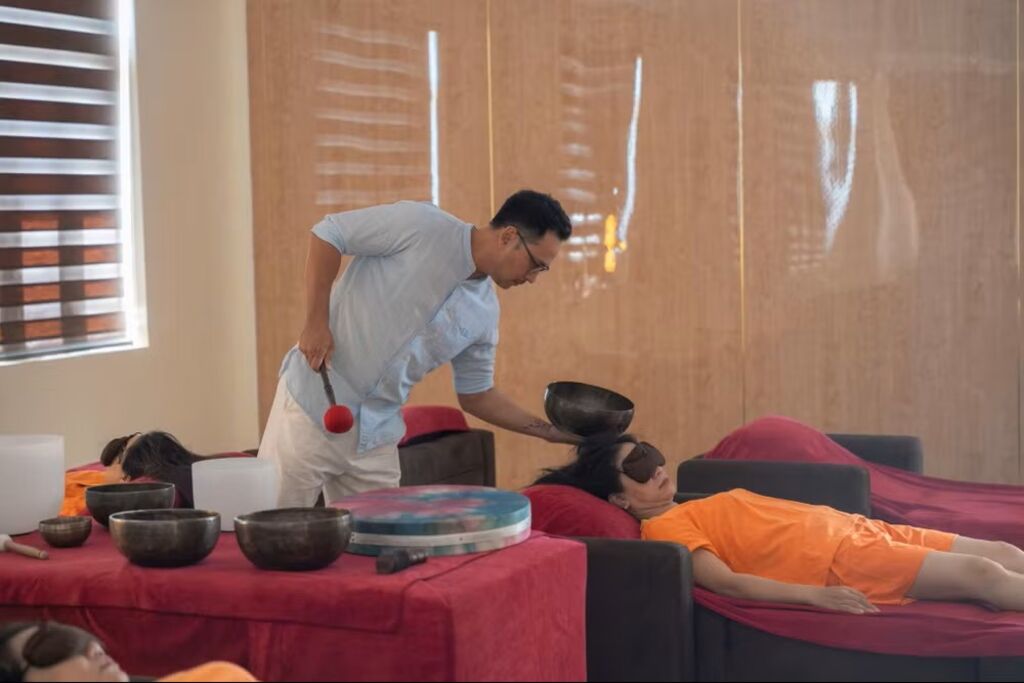
Among the newest products is a wellness programme at Maia Imperial Spa that integrates Hue’s traditional herbal therapies with guided breathing exercises and sound meditation. According to the spa’s manager, today’s visitors are looking not only for physical relaxation but also for relief from the pressures of modern life. Unlike conventional massage treatment therapies, sound meditation uses therapeutic vibrations to help guests achieve deep mental relaxation and inner balance.
The spa has seen rising demand, particularly from women aged between 30 – 50, including business executives and professionals facing high workplace stress. International visitors, especially from the Republic of Korea (RoK), Japan and Europe, are also increasing. Many are already familiar with wellness culture and are willing to pay for authentic healing experiences rooted in local traditions.
Tour operators have witnessed similar changes in consumer demand. Pham Tuan Thien of Hue-based MTRAVEL said the company has developed specialised healing tours after observing that travellers increasingly seek journeys focused on well-being rather than conventional sightseeing.
For visitors from the RoK, meditation and yoga in natural surroundings, traditional herbal therapies, tea ceremonies, vegetarian cuisine and Buddhist-inspired experiences, such as attending prayer ceremonies or interacting with monks, have become particularly attractive. As workplace stress and burnout become more common, Korean travellers are increasingly willing to spend 20–40 per cent more on wellness tours, viewing them as investments in health and quality of life.
Hue’s wellness ecosystem extends beyond private tourism businesses. The city has also developed healthcare services based on the traditional medicine of the Nguyen Dynasty’s imperial medical institute, while Hue Central International Hospital offers medical examinations, treatment and recovery services tailored to international patients and high-end visitors.
Spa treatments, yoga programmes, detox packages and mineral hot spring experiences at local hotels and resorts further enrich the city’s wellness products.
The development of wellness tourism is also aligned with the Politburo’s Resolution No. 57-NQ/TW on breakthroughs in science and technology development, innovation and national digital transformation. For Hue, the strategy provides an opportunity to combine modern medicine with traditional healthcare, biotechnology, indigenous medicinal herbs and tourism to create high-value services.
According to Prof. Dr. Nguyen Vu Quoc Huy, Acting Director of Hue University and Rector of Hue University of Medicine and Pharmacy, the Politburo’s Resolution No. 54-NQ/TW envisions Hue becoming one of Southeast Asia’s leading centres for culture, tourism and specialised healthcare.
He said Hue possesses a unique competitive advantage by combining one of Vietnam’s strongest specialised healthcare systems with the rich legacy of Nguyen Dynasty traditional medicine, abundant medicinal resources and a well-established medical education and research base. Complementing these strengths are the city’s peaceful landscape along the Huong River, ancient pagodas, meditation traditions, leisurely lifestyle and refined and plain cuisine – factors that naturally support physical and mental rejuvenation.
Sharing the same view, Thien believed that these cultural assets distinguish Hue from many destinations where wellness tourism revolves mainly around luxury resorts and spa facilities. Instead, Hue can offer authentic experiences that blend meditation in historic pagodas, traditional herbal therapies, tea appreciation, vegetarian cuisine and heritage exploration.
Nevertheless, experts noted that the city’s greatest challenge lies in connecting these strengths into an integrated value chain. Cooperation among hospitals, travel companies, accommodation providers, wellness centres and resorts remains limited, while comprehensive medical and wellness tourism packages are still lacking.
Prof. Huy suggested Hue develop integrated products combining health screening with resort stays, post-treatment rehabilitation linked to hot mineral springs, meditation and traditional medicine, wellness programmes inspired by the imperial medical institute, elderly care services and digital healthcare. He also proposed building the international brand “Hue – Healthcare Destination” to strengthen the city’s global profile.
As global demand for wellness tourism continues to expand, Hue’s strengths in healthcare, culture and nature offer a unique opportunity to evolve from a renowned heritage destination into a leading wellness destination. Such a transformation will not only enhance the city’s tourism industry but also contribute to developing healthcare into a key economic sector and gradually establish Hue as one of Asia’s emerging “healing cities.”