
Editor’s Note
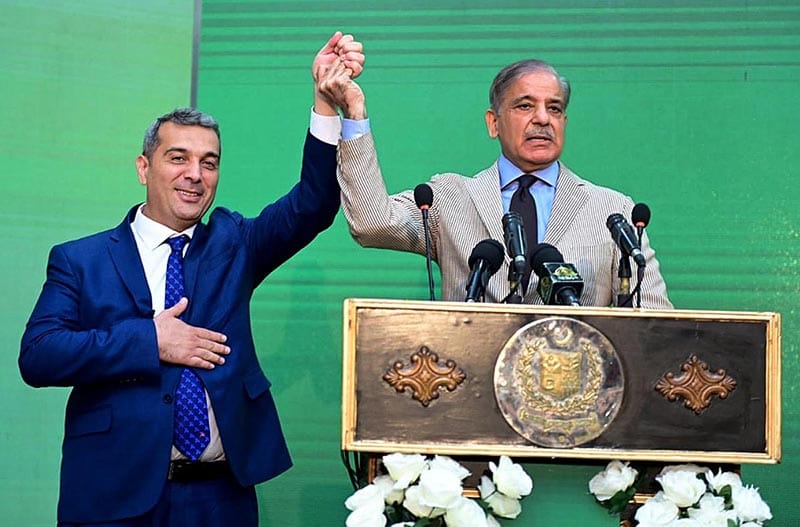
During the outgoing Ambassador Khazar Farhadov’s five-year tenure (2021–2026), Azerbaijan and Pakistan witnessed unprecedented progress in political engagement, strategic defence cooperation, trade and investment, connectivity, education, cultural diplomacy and trilateral collaboration with Türkiye. The institutional foundations laid during this period are expected to further strengthen one of the most enduring brotherly relationships in the region. The WNAM has the honor to have an exclusive interview with the Excellency:
Q. Your Excellency, as you prepare to conclude your diplomatic mission in Pakistan, how do you reflect on these five years?
Ambassador Khazar Farhadov: Serving in Pakistan has been one of the greatest honours of my diplomatic career. Azerbaijan and Pakistan enjoy a unique relationship founded on brotherhood, mutual respect and unwavering support. During the past five years, we worked diligently to transform this historic friendship into an even stronger strategic partnership. Looking back, I leave with immense satisfaction that our bilateral cooperation has expanded across diplomacy, defence, economy, education, culture and people-to-people exchanges.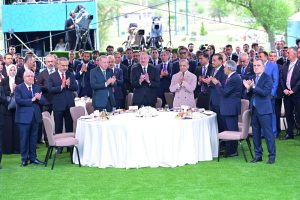
Q. What would you describe as the defining achievement of your tenure?
Ambassador: The defining achievement has been the institutionalization of our strategic partnership. Our leaders maintained unprecedented political engagement through seven bilateral visits at the highest level, while our governments strengthened cooperation through regular foreign office consultations, meetings of the Joint Intergovernmental Commission and active parliamentary diplomacy. We focused not merely on strengthening goodwill but on creating durable institutional frameworks that will continue delivering results for many years.
Q. Azerbaijan and Pakistan have always enjoyed excellent political relations. How have these relations evolved?
Ambassador: Our political relations have become broader, deeper and more structured. We expanded engagement from federal institutions to provincial governments, resulting in the first-ever official visit of the Chief Minister of Punjab to Azerbaijan. This demonstrated that cooperation is now extending beyond central governments to regional economic partnerships, opening fresh opportunities for investment and business collaboration.
Q. Defence cooperation has witnessed remarkable progress. What makes this partnership so special?
Ambassador: Defence cooperation today represents one of the strongest pillars of Azerbaijan-Pakistan relations. Our armed forces conducted extensive leadership exchanges, participated in major joint military exercises and enhanced professional cooperation. The induction of Pakistan’s JF-17 Thunder aircraft into Azerbaijan’s Air Force stands as a historic milestone. It reflects mutual confidence, strategic trust and our shared commitment to regional peace and security.
Q. How significant has trilateral cooperation among Azerbaijan, Pakistan and Türkiye become?
Ambassador: Our trilateral partnership has matured into a comprehensive strategic platform. It has evolved from ministerial consultations to regular meetings among national leaders and parliamentary speakers. This framework enables us to coordinate our efforts in diplomacy, defence and regional cooperation while promoting peace, stability and economic development.
Q. Trade and investment appear to have entered a new phase. What progress gives you the greatest satisfaction?
Ambassador: Economic cooperation has gained unprecedented momentum. Bilateral trade expanded substantially, particularly in strategic sectors including defence, energy and essential commodities. One of the most promising developments has been President Ilham Aliyev’s announcement of a US$2 billion investment package for commercially viable sectors in Pakistan. Together with agreements on preferential and transit trade, these initiatives establish a strong foundation for long-term economic partnership.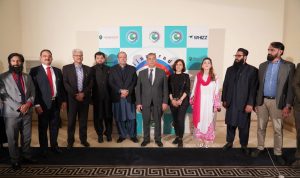
Q. How important are institutional initiatives such as the Joint Chamber of Commerce and Trade House?
Ambassador: Institutions create continuity. The establishment of the Azerbaijan-Pakistan Joint Chamber of Commerce and Industry in Islamabad and the Azerbaijan Trade House in Lahore provides businesses with practical platforms for networking, investment and commercial cooperation. Such institutions will continue serving entrepreneurs and investors long after diplomatic tenures end.
Q. Direct connectivity between the two countries has improved considerably. How has this changed bilateral relations?
Ambassador: Connectivity transforms relationships. The restoration of direct flights after almost three decades has significantly increased tourism, business travel and cultural exchanges. Combined with Azerbaijan’s ASAN online visa system, it has enabled tens of thousands of Pakistanis to visit Azerbaijan, strengthening mutual understanding and bringing our societies closer together.
Q. Educational cooperation has witnessed extraordinary growth. Was this one of your priorities?
Ambassador: Absolutely. Education is an investment in future generations. During my tenure, the number of Pakistani students studying in Azerbaijan increased dramatically. Universities, think tanks and research institutions from both countries signed numerous agreements, while new academic and cultural centres promoted language learning, research and intellectual cooperation. These are enduring investments in our shared future.
Q. The ASAN Service model has also entered Pakistan. How do you view this cooperation?
Ambassador: The implementation of the ASAN Service model demonstrates that our cooperation extends beyond diplomacy into governance and public service innovation. Sharing successful administrative experiences strengthens institutional capacity and reflects the growing confidence between our two countries.
Q. Throughout your tenure, what impressed you most about Pakistan?
Ambassador: What impressed me most was the warmth, generosity and sincerity of the Pakistani people. Wherever I travelled, I experienced genuine friendship and respect for Azerbaijan. This emotional bond between our peoples is perhaps the strongest guarantee that our bilateral relations will continue flourishing in the future.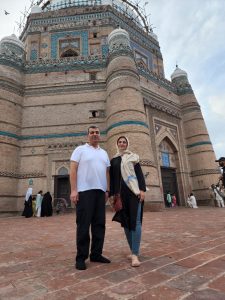
Q. Every diplomatic mission faces challenges. What lessons have you learned?
Ambassador: Diplomacy requires patience, consistency and trust. Lasting partnerships are built through continuous engagement, sincere dialogue and mutual respect. The experience reinforced my belief that countries with shared values can overcome challenges together and achieve extraordinary results when they work with a common vision.
Q. How do you envision Azerbaijan-Pakistan relations over the next decade?
Ambassador: I believe the future is exceptionally promising. Strong political trust, expanding economic cooperation, strategic defence collaboration and growing people-to-people exchanges provide a solid foundation for even greater achievements. I am confident that the next decade will witness stronger investment, higher trade volumes and broader cooperation across emerging sectors.
Q. What message would you like to convey to the business communities of both countries?
Ambassador: I encourage entrepreneurs and investors to seize the immense opportunities available in both markets. Governments have established important legal and institutional frameworks, but it is the private sector that transforms agreements into tangible economic growth. I hope business communities will continue building partnerships that benefit both nations.
Q. Finally, what would you like to say to the people of Pakistan as you bid farewell?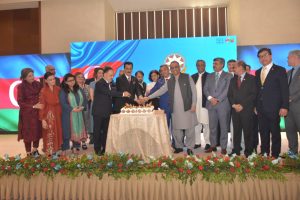
Ambassador: Pakistan will always occupy a special place in my heart. I extend my heartfelt gratitude to the Government of Pakistan, its institutions, the diplomatic community, media, academia, business leaders and every Pakistani who welcomed me with friendship and kindness. Although my diplomatic assignment concludes, my affection for Pakistan and confidence in Azerbaijan-Pakistan brotherhood will remain lifelong. I leave with cherished memories and the firm belief that the best chapter of our bilateral relationship is still ahead.