
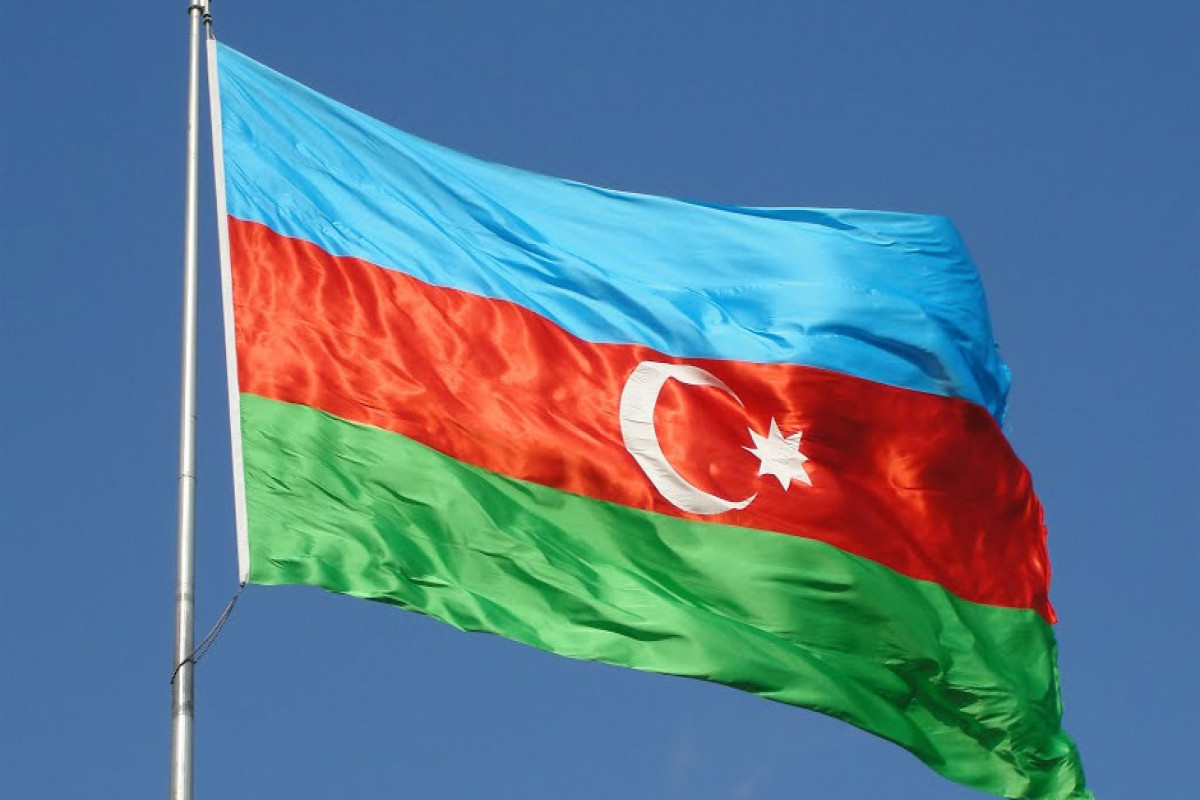
Every nation carries within its history certain dates that transcend the ordinary calendar. They become symbols of resilience, national memory and the enduring right of a people to determine its own destiny.
For Azerbaijan, September 20 — State Sovereignty Day — represents precisely such a moment: a date that connects independence, territorial integrity, national identity and the restoration of constitutional authority across the country.
The day commemorates a decisive chapter in Azerbaijan’s modern history. On September 20, 2023, following the events of September 19–20 in the Karabakh region, Azerbaijan declared that its state sovereignty had been fully restored. In September 2024, President Ilham Aliyev formally established September 20 as State Sovereignty Day.
But the meaning of this day extends beyond a single military or political event. It is rooted in a decades-long national journey shaped by the dissolution of the Soviet Union, the restoration of independence, the conflict over Karabakh, international diplomacy, military confrontation, and ultimately the challenge of transforming territorial restoration into lasting peace and regional prosperity.
From Independence to the Struggle for Territorial Integrity
Azerbaijan restored its independence in 1991, following the adoption of the Constitutional Act on State Independence on October 18 of that year. The modern republic regards itself as the successor of the Azerbaijan Democratic Republic established in 1918 — a state that existed for only 23 months but left an important legacy in the history of Azerbaijan’s statehood.
The first years of independence, however, were accompanied by profound security and territorial challenges. The Karabakh conflict resulted in large-scale displacement, destruction and loss of life, while the international community became increasingly engaged in efforts to establish a political settlement.
For Azerbaijan, territorial integrity became one of the defining principles of its state policy.
The Azerbaijani Constitution itself describes the country’s territory as united, inviolable and indivisible, while establishing sovereignty of the people over their political destiny.
This constitutional principle would eventually become intertwined with Azerbaijan’s diplomatic and political narrative on the international stage.
The Diplomatic Dimension
The story of Azerbaijan’s territorial integrity cannot be understood exclusively through the prism of military events. It also belongs to the history of international diplomacy.
In 1993, the UN Security Council adopted Resolutions 822, 853, 874 and 884 concerning the conflict. Azerbaijan’s official position has consistently emphasized these resolutions as part of the international legal framework surrounding its territorial integrity.
For decades, negotiations sought a peaceful settlement. The unresolved conflict shaped Azerbaijan’s foreign policy, security calculations and national consciousness.
The diplomatic track demonstrated a fundamental truth of international relations: territorial disputes rarely remain confined to maps. They affect human lives, economic development, regional connectivity, security and relations among neighboring states.
The Turning Point of 2020
The year 2020 marked a dramatic transformation in the conflict.
Following renewed fighting beginning on September 27, Azerbaijan and Armenia fought a 44-day war. The subsequent ceasefire agreement fundamentally altered the territorial and political landscape of the region.
For Azerbaijan, the war resulted in the restoration of control over significant territories and became a defining national event. November 8 was subsequently designated Victory Day in Azerbaijan.
Yet the events of 2020 did not immediately resolve every question surrounding Karabakh.
The final and decisive stage came three years later.
September 19–20, 2023: A New Chapter
On September 19, 2023, Azerbaijan launched what it described as local anti-terror measures in the Karabakh region. The fighting ended on September 20 after approximately 24 hours.
The United Nations Secretary-General expressed concern at the time over the use of military force and civilian casualties and called for an immediate end to the fighting, de-escalation and adherence to international humanitarian law.
Azerbaijan subsequently announced that its constitutional order and sovereignty had been restored throughout the country.
The Azerbaijani government regards September 20, 2023, as the culmination of its decades-long struggle for territorial integrity. In 2024, this interpretation was formally incorporated into the country’s national calendar through the establishment of State Sovereignty Day.
Thus, September 20 carries a dual meaning: the restoration of territorial authority and the beginning of a new post-conflict era. 
Sovereignty Beyond the Battlefield
The real test of sovereignty, however, extends beyond the raising of a national flag.
Sovereignty in the 21st century is also measured through institutions, economic opportunity, infrastructure, education, investment, rule of law and the ability of citizens to live securely and productively.
This is particularly significant for Azerbaijan’s post-conflict territories.
The country’s Great Return programme has sought to facilitate the reconstruction and resettlement of areas affected by decades of conflict. Khankendi and other parts of Karabakh have increasingly become symbols of Azerbaijan’s attempt to connect political sovereignty with reconstruction and development.
The opening of the renovated Karabakh University in Khankendi in September 2024 was especially symbolic. It demonstrated an effort to associate the post-conflict period not only with security, but also with education, human development and institutional reconstruction.
A Regional Perspective
The significance of Azerbaijan’s sovereignty story extends beyond its national borders.
The South Caucasus sits at the intersection of Europe, Central Asia, the Middle East and the Black Sea. Azerbaijan’s geographical position has made it an increasingly important participant in energy transportation, trade corridors and regional connectivity.
The country’s development of transport and energy links has given its sovereignty an economic dimension. A secure and connected South Caucasus can contribute to broader commercial integration between Central Asia, the Caspian region, Türkiye and European markets.
This is why the future of the region matters not only to Azerbaijan and Armenia, but also to Türkiye, Georgia, Iran, Central Asian states, Russia, the European Union and international investors.
The transition from conflict to cooperation could potentially redefine the economic geography of the South Caucasus.
The Human Dimension
Behind every discussion of sovereignty and territorial integrity are people.
Families displaced from their homes. Communities separated from their places of origin. Soldiers who lost their lives. Civilians who experienced war. Generations who grew up with conflict as part of their national consciousness.
For Azerbaijanis, State Sovereignty Day therefore carries a strong emotional and historical dimension. It is associated with remembrance of those who died, with the return of displaced communities and with the restoration of places regarded as integral to national heritage.
At the same time, the humanitarian consequences of the conflict underscore the importance of reconciliation, humanitarian protection and a durable peace between Azerbaijan and Armenia.
The United Nations has repeatedly emphasized the need for peaceful engagement, humanitarian access and long-term stability in the region.
From Territorial Integrity to Regional Peace
The most consequential question now is how the post-conflict environment will shape the future.
Azerbaijan’s restoration of territorial control has fundamentally changed the political geography of the South Caucasus. The challenge for the coming years is to translate this new reality into sustainable peace, economic cooperation and regional connectivity.
Peace is not simply the absence of war. It is the creation of conditions in which borders become bridges rather than barriers, trade becomes more important than confrontation, and young people inherit opportunities rather than unresolved grievances.
In this context, sovereignty and peace should not be viewed as opposing concepts.
A state can firmly defend its sovereignty while simultaneously pursuing diplomatic engagement, economic cooperation and regional reconciliation.
A Message for the International Community
Azerbaijan’s State Sovereignty Day also offers a broader reflection on the international system.
The principle of territorial integrity remains one of the foundational concepts of international relations. At the same time, modern diplomacy demands that territorial questions be accompanied by serious attention to human rights, humanitarian concerns, security, dialogue and sustainable development.
The international community’s responsibility does not end when the guns fall silent.
It begins anew.
Reconstruction, humanitarian cooperation, economic integration and confidence-building are essential components of transforming the end of conflict into the beginning of peace.
The Road Ahead
September 20 should therefore be understood not merely as a commemoration of what Azerbaijan has achieved, but also as a point of departure.
The restoration of sovereignty has opened a new chapter — one in which the success of the post-conflict era will increasingly be measured by schools rebuilt, families resettled, businesses established, roads and railways connected, cultural heritage preserved and opportunities created for future generations.
Azerbaijan’s journey from restored independence in 1991 to the establishment of State Sovereignty Day in 2024 is one of the most consequential chapters in the contemporary history of the South Caucasus.
Its significance is national, but its implications are regional.
And perhaps the most important lesson of this journey is that the true strength of sovereignty is ultimately demonstrated not only by the ability to defend territory, but by the ability to transform peace into prosperity, memory into reconciliation, and restored territory into a future of opportunity.
As Azerbaijan marks State Sovereignty Day, the country’s flag stands as a symbol of a long historical journey — from independence, through conflict and displacement, toward territorial restoration and the difficult but potentially transformative task of building a peaceful and prosperous future.
For Azerbaijan, September 20 is a day of sovereignty. For the region, it can become a day to reflect on the possibilities that emerge when conflict gives way to connectivity, reconstruction and peace.( The author is: Editor-in-Chief, World News AM)