
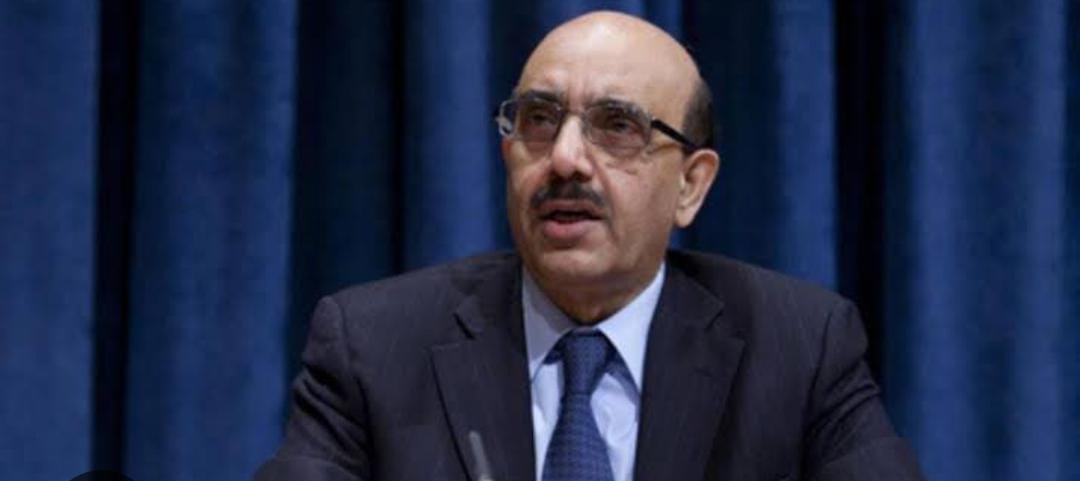
WNAM REPORT: The confrontation between the United States and Iran is increasingly shifting towards economic warfare, with prolonged tensions likely to have serious consequences for the global economy, said Sardar Masood Khan, Former Ambassador of Pakistan to the United States, China and the United Nations, and former President of Azad Jammu and Kashmir.
Commenting on the deteriorating situation between Washington and Tehran, Sardar Masood Khan said two developments were taking place simultaneously: the escalation of military tensions and continuing diplomatic efforts by Pakistan and other regional countries to prevent the conflict from developing into a full-scale war.
He said the immediate rise in international oil prices following the latest attacks posed a significant challenge to the global economy. Higher oil prices would directly fuel inflation, while central banks could be compelled to raise policy rates to contain inflationary pressures. This, in turn, could reduce GDP growth and undermine the economic viability of major projects, he added.
Sardar Masood Khan warned that if the Iranian situation continued to deteriorate, the consequences would extend well beyond the region. “As the Iranian situation aggravates, global economic viability will also become a question mark,” he observed, pointing to the wider impact of energy prices, financial conditions and geopolitical uncertainty.
He noted that Pakistan was continuing its diplomatic efforts, alongside other regional countries, while military tensions had again intensified. Despite increasingly hostile rhetoric and severe attacks, he said, both Washington and Tehran appeared to have an interest in avoiding a return to a full-fledged war and ultimately seeking some form of mutual understanding.
Sardar Masood Khan said the United States was increasingly relying on economic instruments rather than sustained military action. He referred to the reported pressure on Iran’s banking sector, cryptocurrency and aviation as part of a broader strategy aimed at weakening the Iranian economy and putting pressure on its political, military and ideological leadership.
He described the confrontation as a prolonged struggle involving military, economic and political dimensions. Iran, he said, was already facing severe economic pressures, while the continuing conflict was also creating political costs for the United States and President Donald Trump.
He stressed that the economic dimension of the conflict could prove particularly consequential because its effects were not confined to Iran. Rising energy prices, disruption to shipping and higher insurance costs could affect countries across Europe, Asia and the Gulf, including Pakistan.
Sardar Masood Khan emphasized that diplomatic engagement remained essential to prevent further escalation. Pakistan, together with regional partners, was seeking to create space for dialogue and negotiations between the two sides.
“The objective should be to bring the parties back to the negotiating table rather than allow escalation to continue,” he said, adding that sustained diplomacy was the most viable path towards containing the conflict and protecting regional and global economic stability.