
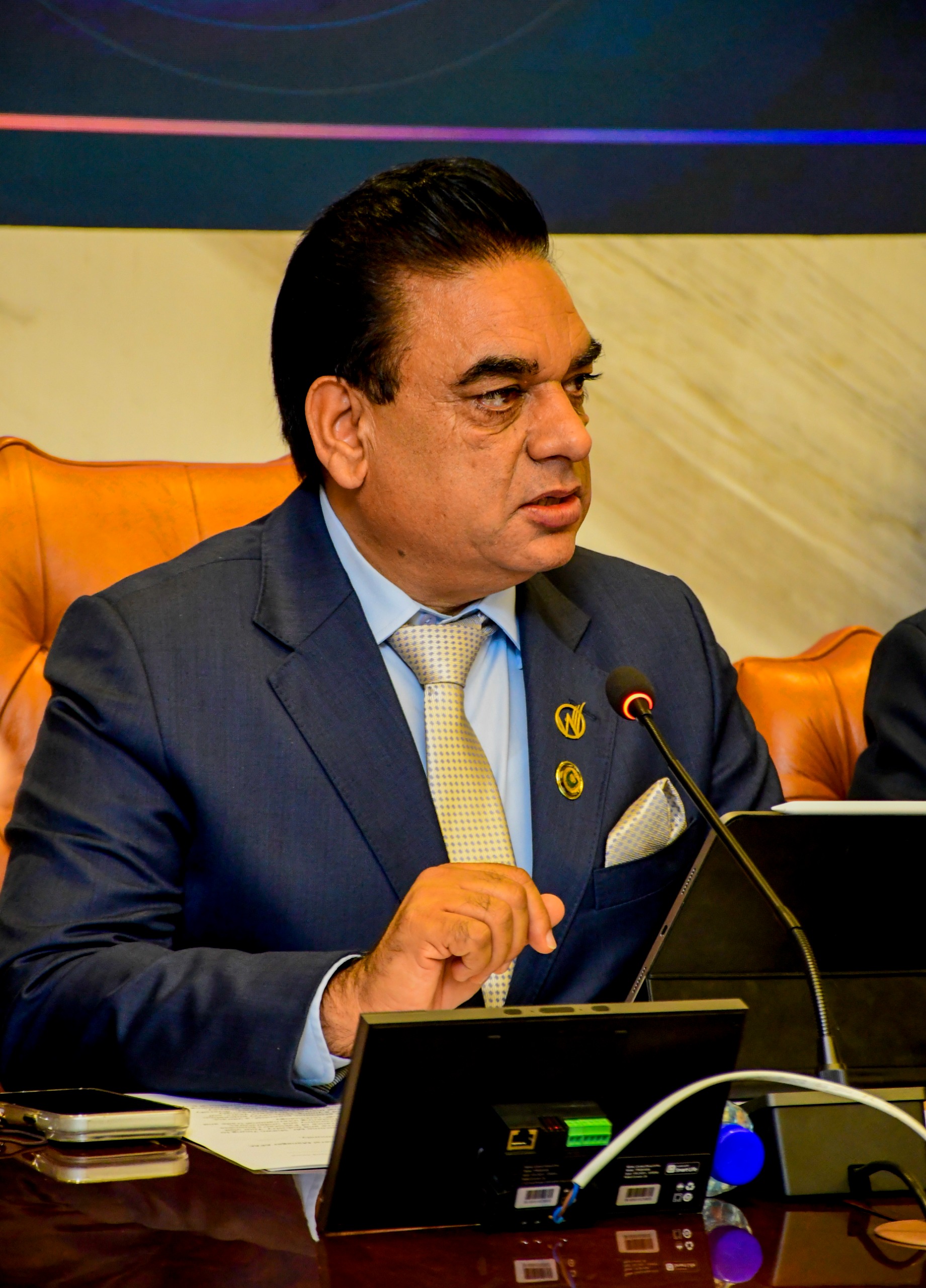
WNAM REPORT: President Islamabad Chamber of Commerce and Industry (ICCI) Sardar Tahir Mehmood has called for a comprehensive, long-term and clearly defined roadmap for sustainable economic growth, stressing that Pakistan can no longer afford fragmented and short-term economic policies. He said the country needs continuity, policy consistency and a shared national economic vision under which government institutions, the private sector and other stakeholders work together to transform Pakistan’s economy into a productive, competitive and export-oriented one.
Talking to different visiting delegations of business leaders here on Friday, he said exports must be placed at the heart of Pakistan’s economic strategy, as sustainable growth cannot be achieved merely through borrowing, consumption and repeated cycles of external financing. He emphasized the need to diversify the export basket, expand market access, improve product quality and branding, and support exporters in entering high-value international markets. Special attention should be given to IT and digital services, engineering goods, pharmaceuticals, processed food, textiles and value-added agriculture, while SMEs should be integrated into global supply chains through technology, skills development and digital platforms.
The ICCI President stressed that industrial competitiveness is the foundation of export growth, and Pakistan must urgently address high energy costs, taxation issues, regulatory barriers, expensive financing, weak logistics and other structural constraints that raise the cost of doing business. He called for a predictable tax regime, competitive electricity and gas tariffs, simplified regulatory procedures and faster refunds and clearances so that businesses can invest, expand production and compete effectively in international markets. “The objective should be to make Pakistan a place where producing for the world is easier than producing for the domestic market,” he said.
He further proposed that the government, in consultation with chambers of commerce and industry, should develop a 10-year National Economic and Export Roadmap with measurable annual targets for investment, exports, industrial output, employment, productivity and foreign direct investment. The roadmap should clearly identify priority sectors, export markets and investment opportunities, assign responsibilities to relevant institutions and establish a transparent mechanism for monitoring progress. He said frequent policy reversals undermine investor confidence, therefore economic policies should enjoy broad institutional ownership and continuity beyond political and administrative cycles.
Sardar Tahir Mehmood said Pakistan also needs to move from an import-dependent and consumption-driven model towards production, innovation and investment-led growth. He urged greater facilitation for domestic and foreign investors, development of Special Economic Zones and industrial clusters, modernization of infrastructure, promotion of renewable energy, investment in technical and vocational skills, and stronger linkages between universities, research institutions and industry. He added that overseas Pakistanis should be provided attractive and transparent investment channels so that their capital, expertise and international business networks can contribute to the country’s productive capacity.
The ICCI President said the business community is ready to play its role in Pakistan’s economic transformation and called for a permanent institutional mechanism for structured consultation between the government and the private sector. He stressed that Pakistan’s economic future should be measured not only by the size of its GDP, but by the number of businesses that expand, jobs that are created, products that reach global markets and investments that remain productive for decades. He expressed confidence that with policy continuity, institutional coordination and a focused export strategy, Pakistan can unlock its immense economic potential and emerge as a competitive player in regional and global markets.
Exports must be at heart of Pakistan’s economic strategy: Sardar Tahir Mehmood
1