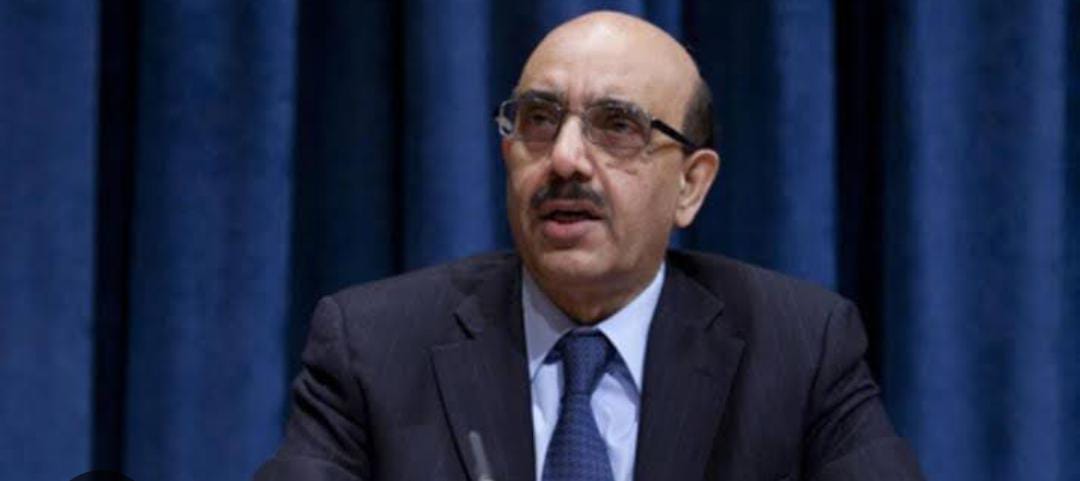
WNAM REPORT: China’s growing diplomatic engagement in the Middle East, particularly its coordination with Pakistan and dialogue with the United States and Iran, can contribute to lowering tensions and creating space for negotiations, said Sardar Masood Khan, Former Ambassador of Pakistan to the United States, China and the United Nations, and former President of Azad Jammu and Kashmir.
Commenting on the forthcoming meeting between Chinese President Xi Jinping and US President Donald Trump, Sardar Masood Khan described the development as positive, saying it could help lower temperatures not only globally but also in the Middle East. He noted that China had recently become more active diplomatically regarding the US-Iran conflict and had emphasised the importance of freedom of navigation in the Red Sea and the Persian Gulf. Recent Chinese diplomatic statements have likewise called for restraint, renewed negotiations and the reopening of the Strait of Hormuz.
He recalled that China had previously supported Pakistan’s mediation efforts. China and Pakistan jointly put forward a five-point initiative in March calling for an immediate cessation of hostilities, early peace talks, protection of civilians and non-military targets, security of shipping lanes, and adherence to the primacy of the UN Charter and international law.
Sardar Masood Khan expressed the hope that, alongside China, other major actors, particularly Russia and European countries, would contribute to diplomatic efforts aimed at reducing tensions and restoring negotiations. He stressed that dialogue remained essential even amid competing narratives and allegations arising from the conflict.
Discussing allegations of war crimes and crimes against humanity, he said such matters should be distinguished from the political and military dimensions of the conflict. He noted that allegations concerning protests in Iran preceded the war and that conflicting casualty figures had made it difficult to establish the facts. Regarding allegations of war crimes during the conflict, he observed that international judicial proceedings, when initiated, can take years to reach conclusions and that judgments are not always effectively implemented.
On the future of the regional security architecture, Sardar Masood Khan said one possible development would be greater economic and security interdependence between Iran and the Gulf states. He suggested that such an architecture could be supported by China, Russia and European countries.
He, however, said he did not foresee the United States completely withdrawing from the Middle East, given its strategic, security, economic and energy interests in the region. At the same time, he observed that the role of the United States could change as Gulf countries reassess their security arrangements after recognising that even extensive military cooperation and arms acquisitions do not eliminate their vulnerability to regional attacks.
Sardar Masood Khan said the evolving crisis could therefore encourage greater regional cooperation and a more diversified security architecture, while sustained diplomacy remained essential for achieving lasting peace and stability.