
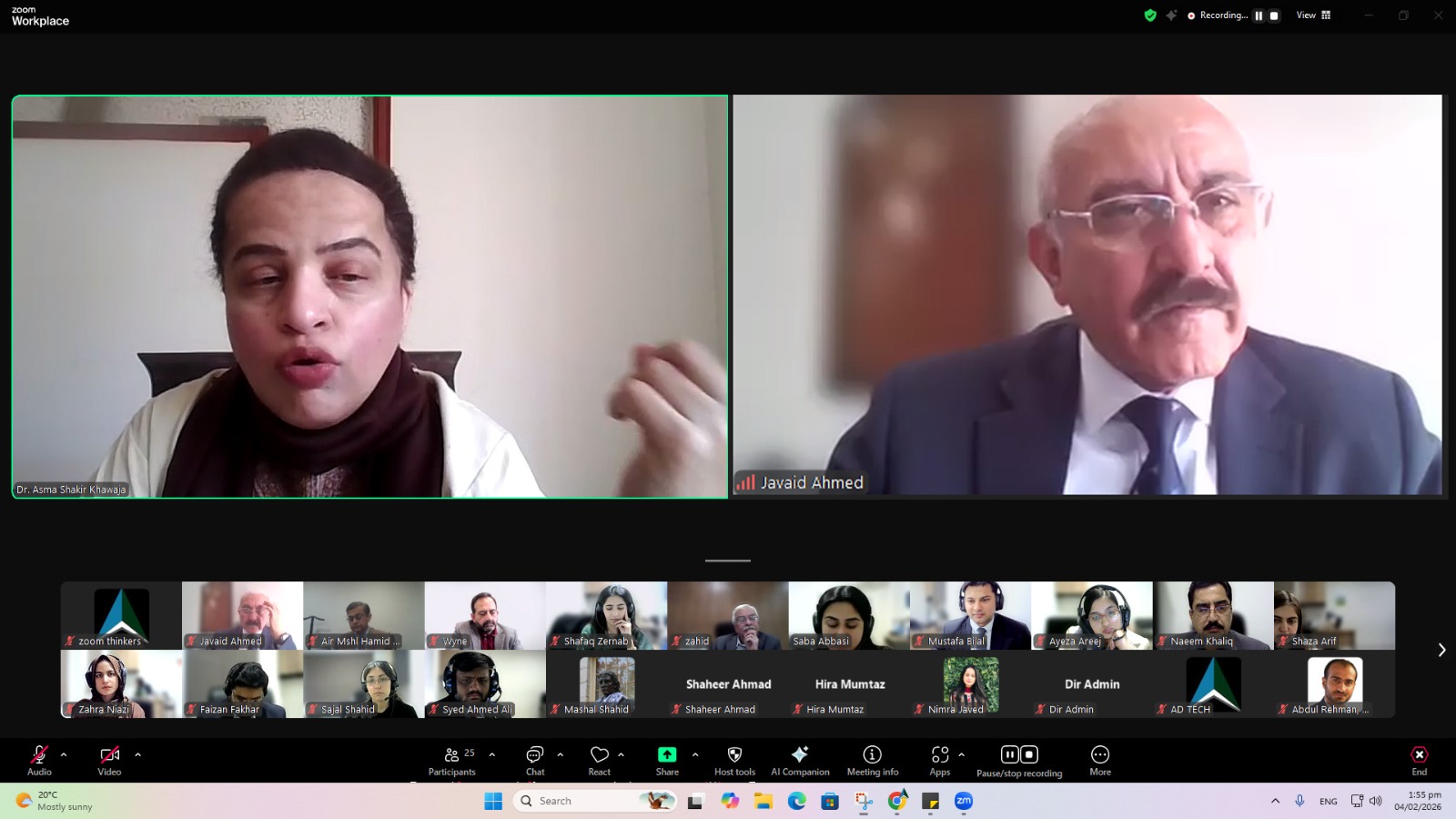
WNAM REPORT: The Centre for Aerospace & Security Studies (CASS), Islamabad, organised a webinar titled ‘The Kashmir Dispute in the Aftermath of the 2025 Conflict’ on 4 February 2026. The webinar examined the impact of the May 2025 hostilities on the Kashmiri population in Indian Illegally Occupied Jammu and Kashmir (IIOJK), assessed how India’s policies have shaped their lived realities, and explored the diplomatic, legal, and political options available to Pakistan for strengthening international engagement on the Kashmir dispute in the post-2025 conflict scenario. As an independent think tank, CASS continues to engage with national and international academia and practitioners interested in National Security in its wider context.
The session was moderated by Air Marshal (Retd.) Zahid Mehmood, Senior Director at CASS. He emphasised that the dispute is not merely territorial but a political and humanitarian issue rooted in the unfinished agenda of partition and the unfulfilled right to self-determination of the Kashmiri people, as recognised by the United Nations.
In her keynote address, Dr Asma Shakir Khawaja, Executive Director of the Centre for International Strategic Studies (CISS) AJK, explained that Kashmir holds central importance for India due to ideological motivations, strategic considerations relating to China, control over water resources, and the imposition of a majoritarian narrative over the only Muslim-majority region under Indian control. From Pakistan’s perspective, she stressed that the dispute is grounded in the principles of the Radcliffe Award, shared ethnic and religious ties, strategic imperatives, and the primacy of human rights and dignity. Critiquing the Modi government’s Kashmir policy, she observed a declining appetite for peace, a more aggressive security posture, and prestige-driven narratives projecting India as a ‘vishwaguru’. She argued that attempts to normalise the situation through tourism and sporting events have failed to conceal coercive ground realities.
Looking ahead, Dr Khawaja called for moving beyond cosmetic measures to address the core issue of self-determination, humanising the Kashmir conflict, challenging ideological extremism, and linking Kashmir with contemporary global issues to enhance international engagement.
Air Marshal Javaid Ahmed (Retd.), President of CASS, thanked the keynote speaker for her valuable contributions and reaffirmed Pakistan’s principled stance in supporting a just, durable, and peaceful resolution of the Jammu and Kashmir dispute in accordance with the aspirations of the Kashmiri people and relevant UN resolutions.
The Kashmir Dispute in the Aftermath of the 2025 Conflict discussed at the CASS Webinar
7