
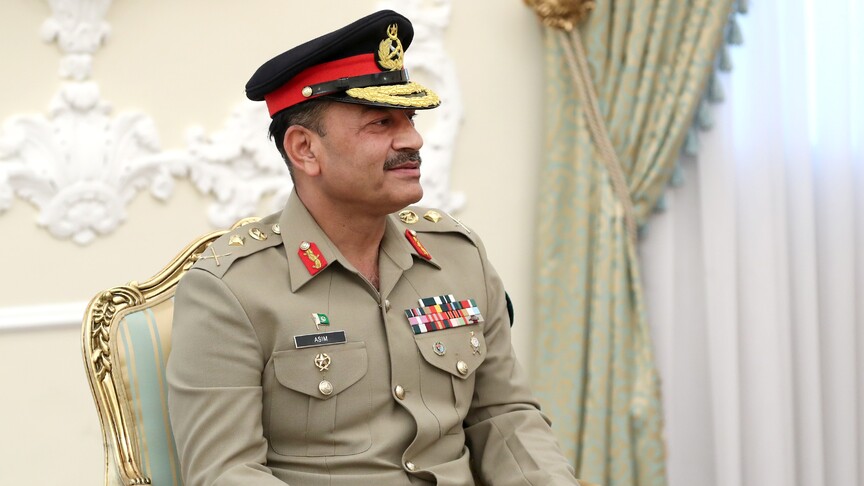
WNAM MONITORING: Pakistan is working for a “breakthrough” on Iran’s nuclear program issue in “days to come” as Pakistani army chief Gen. Asim Munir is holding talks with Iranian leadership on the issue, which remains the key bottleneck in the way of a negotiated settlement with the US, two Pakistani government sources told Anadolu.
Islamabad “is working on bringing a maximum understanding” between the US and Iran, with a focus on Tehran’s nuclear issue, before a possible new round of talks in the Pakistani capital, said the sources, stressing anonymity for discussing “sensitive details” of the ongoing mediation process.
Sources also said Iran has agreed to a third-party monitoring of its nuclear program by four nations jointly with the International Atomic Energy Agency (IAEA).
“Tehran in principle agrees to Islamabad’s proposal” of third-party monitoring on its nuclear program, they said, adding that Iran has no objection to the inclusion of the IAEA in the four-nation monitoring framework.
Iran has conveyed its agreement to Munir, while Washington has yet to react to the proposal, the sources noted.
No names were provided for potential members of the four-nation team.
The US has long demanded “strict and comprehensive” monitoring to ensure that Iran does not build a nuclear weapon.
Reports have emerged from Tehran that gaps between the US and Iranian demands have been “reduced,” while the nuclear issue remains the main issue.
Washington’s priority, however, “still is the suspension of Iran’s uranium enrichment program for at least 20 years in exchange for sanctions relief,” the Pakistani sources added.
Iran is said to have over 400 kilograms (882 pounds) of enriched uranium, and Tehran has proposed that it can suspend nuclear activity for up to five years, according to The New York Times.
‘US trip’ after Iran exchanges, no dates for fresh talks
Pakistan’s army chief Munir may visit Washington, DC, “in a day or two” to meet with US President Donald Trump to discuss various issues related to Islamabad’s proposal, the Pakistani government sources said.
There has been no official confirmation or announcement regarding a possible US visit by Munir.
Technical teams of the US and Iran “are constantly exchanging messages” to reach the “maximum understanding” before another round of talks, the Pakistani sources told Anadolu, adding: “Both sides want the next round of talks to be a ‘deal-signing’ ceremony.”
Expressing optimism about the prospects of a four-nation third-party team, the sources added: “There could be a different framework — a mix of four-nations formula and Washington’s demands; it could also be a 10-year moratorium on Iran instead of five years.”
The situation, they added, “would be clear” after Munir’s possible US visit.
Pakistani Foreign Ministry spokesman Tahir Andrabi confirmed on Thursday that the nuclear issue was “among the subjects” being discussed by the warring parties.
“We will not comment on the positions of Tehran and the parties involved in the negotiations. This is part of the parties’ trust in us,” he noted.
Tehran has also demanded a guarantee against any fresh attacks by the US or Israel.
Speculations on possible new round of Washington-Tehran talks
Andrabi told reporters that no dates or a venue have been decided for the possible new round of US-Iran talks.
White House, however, has said the expected talks will likely be held in Islamabad.
Pakistan took center stage when it brokered a two-week ceasefire on April 8 between the US and Iran, followed by high-stakes talks in Islamabad attended by senior delegations from the two countries over the weekend.
Although the talks did not yield the desired results, the ceasefire remains in effect, and speculation about another round of negotiations continues to grow.
The Islamabad talks were the highest-level direct negotiations between the US and Iran since 1979.
Over 3,300 people in Iran have been killed since the US and Israel launched a joint military campaign against the country on Feb. 28. Hundreds of thousands of others have been internally displaced.
During the armed conflict, the US has lost at least 13 servicemen, while hundreds of others have been wounded.