
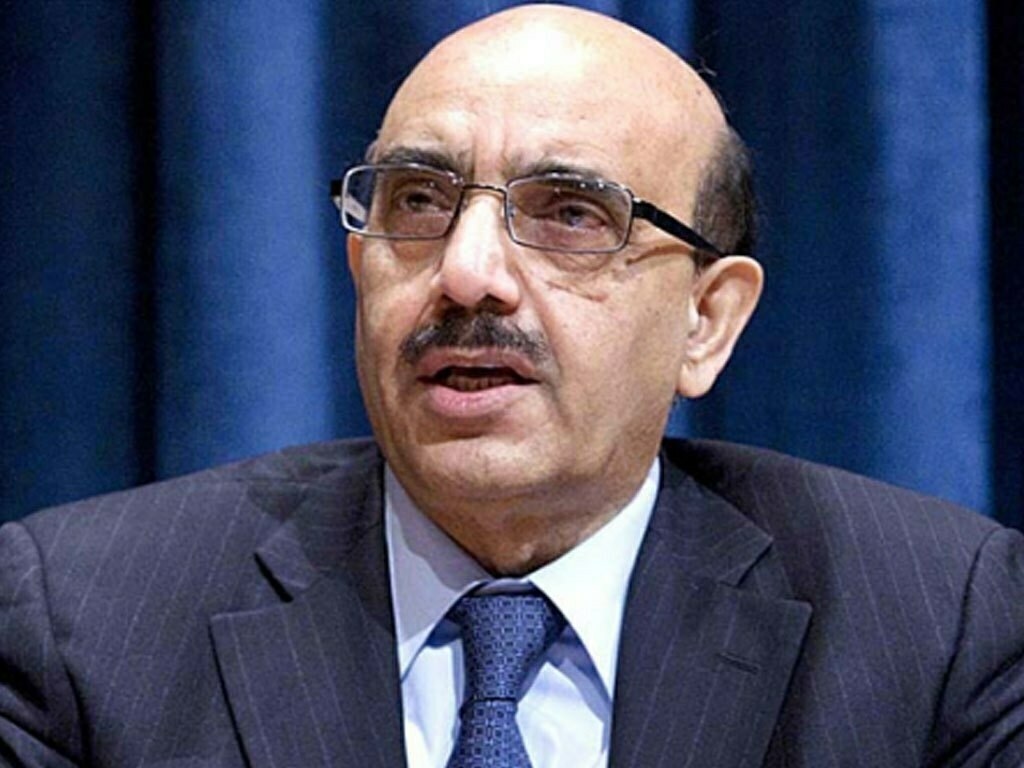
ISLAMABAD ( WNAM REPORT): Former President of Azad Jammu and Kashmir and former Ambassador of Pakistan to the United States and China, Masood Khan, on Saturday said that the visit of Field Marshal Asim Munir to Iran marks a critical phase in ongoing diplomatic efforts aimed at reducing tensions between Iran and the United States and could pave the way for a broader understanding between the two countries.
Speaking during an international media interview from Islamabad, Ambassador Masood Khan stated that negotiations have accelerated significantly during the past week and appear to be entering a decisive stage. He noted that intensive shuttle diplomacy by Pakistan, including the engagements led by Interior Minister Mohsin Naqvi and the latest visit by Field Marshal Asim Munir to Tehran, reflects Islamabad’s active role in facilitating dialogue and confidence-building measures between the concerned parties.
Ambassador Masood Khan said that growing speculation from Washington, Tehran, and Gulf capitals suggests that the two sides may be moving closer to a preliminary understanding. According to him, the likely outcome at this stage may not be a comprehensive settlement, but rather a framework agreement or memorandum of understanding that could establish the basis for future negotiations and prevent further escalation.
He emphasized that the immediate priority of all mediation efforts is to stop the continuation of hostilities and remove uncertainty affecting international markets and regional stability. He added that an initial understanding between the two sides could reassure the global community and reduce fears of renewed military confrontation.
Commenting on recent statements by US Secretary of State Marco Rubio, Ambassador Masood Khan observed that Washington has adopted a cautious but constructive tone regarding the negotiations. He noted that reports emerging from diplomatic circles indicate that early agreements may focus primarily on issues related to the Strait of Hormuz, including freedom of navigation and the removal of maritime restrictions imposed during the crisis.
He further stated that more sensitive and complex issues related to Iran’s nuclear programme, including uranium enrichment, stockpiles, and sanctions, are expected to be addressed in subsequent phases of dialogue. Ambassador Masood Khan added that both sides may also agree on commitments to refrain from attacks on military, economic, and civilian infrastructure, which would constitute a major confidence-building measure for regional peace.
Highlighting Pakistan’s diplomatic credibility, Ambassador Masood Khan said that both Tehran and Washington continue to place trust in Pakistan’s mediation efforts. He noted that the broader international community has also supported Islamabad’s role, recognizing Pakistan as the principal facilitator in ongoing diplomatic engagements.
Ambassador Masood Khan further remarked that if preliminary understandings are reached in Tehran, Islamabad could potentially host a second round of formal negotiations between the two sides. He stressed that while decades of mistrust cannot be removed overnight, current diplomatic momentum offers a meaningful opportunity to reduce tensions and move towards a more stable regional environment.
Concluding his remarks, Ambassador Masood Khan expressed hope that ongoing efforts would culminate in an agreement capable of preventing further conflict, restoring regional confidence, and opening the door for sustained diplomacy between Iran and the United States.