
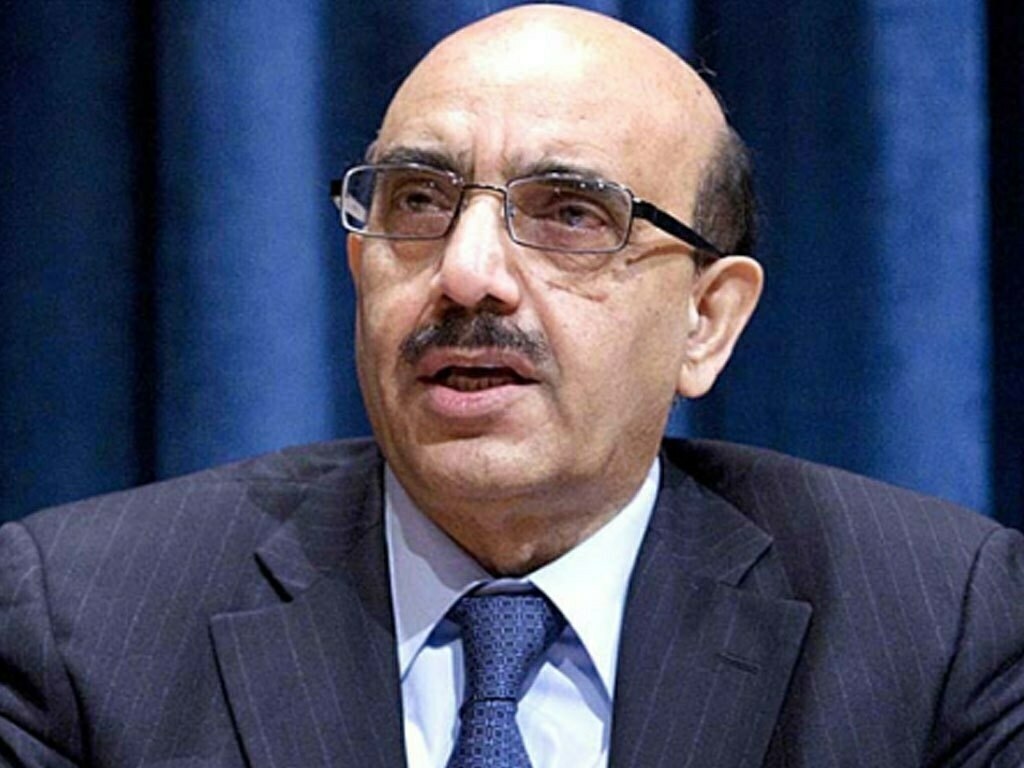
ISLAMABAD ( WNAM MONITORING): Masood Khan, former Ambassador of Pakistan to the United States, China and the United Nations, and former President of Azad Jammu and Kashmir, has underscored that Pakistan is carefully balancing diplomacy and security preparedness as the Iran conflict enters a critical and prolonged phase.
Highlighting the rapidly evolving situation, Khan stated that actions by the United States and Israel have intensified regional volatility, directly impacting Pakistan’s strategic environment. He noted that Islamabad is maintaining a policy of principled neutrality, while actively advocating de-escalation, respect for sovereignty, and adherence to international law.
Khan emphasized that mixed and often contradictory signals from major powers have created strategic ambiguity, increasing the risks of miscalculation. “Such uncertainty compels regional states to prepare for worst-case scenarios while relying more on regional diplomacy than external assurances,” he observed.
Underscoring Pakistan’s diplomatic role, Khan stated that the country is uniquely positioned as a credible and non-partisan mediator, maintaining working relations with both Iran and the United States, as well as strong ties across the Muslim world. He referred to Pakistan’s recent multilateral engagements—including the quadrilateral meeting with Saudi Arabia, Türkiye, and Egypt—as evidence of its growing role as a bridge-builder in crisis diplomacy.
Addressing the risk of broader strategic spillover, Khan warned that continued escalation could draw South Asia into complex geopolitical alignments. He stressed that Pakistan must avoid bloc politics, continue to promote dialogue, and maintain defensive preparedness without becoming entangled in the conflict.
Reflecting on lessons for regional states, Khan noted that over-reliance on external powers for security has proven increasingly risky. “Strategic autonomy, diversified partnerships, and regional cooperation are essential in navigating such crises,” he remarked.
Khan also highlighted the significance of the Pakistan-China Five-Point Peace Initiative, describing it as a practical and timely framework anchored in ceasefire, structured dialogue, humanitarian protection, and respect for sovereignty. While acknowledging that its success depends on the willingness of key stakeholders—particularly Iran and the United States—he said the initiative provides a credible pathway for negotiations.
On maritime security, Khan underscored the importance of the Strait of Hormuz for global energy flows and emphasized that Pakistan, in coordination with regional partners, can contribute through naval diplomacy and confidence-building measures to ensure freedom of navigation.
Concluding, Khan cautioned that the ongoing conflict carries the risk of wider regional and global destabilization. He stressed that sustained diplomatic engagement, supported by regional consensus and international cooperation, remains essential to preventing further escalation and achieving a durable peace.