
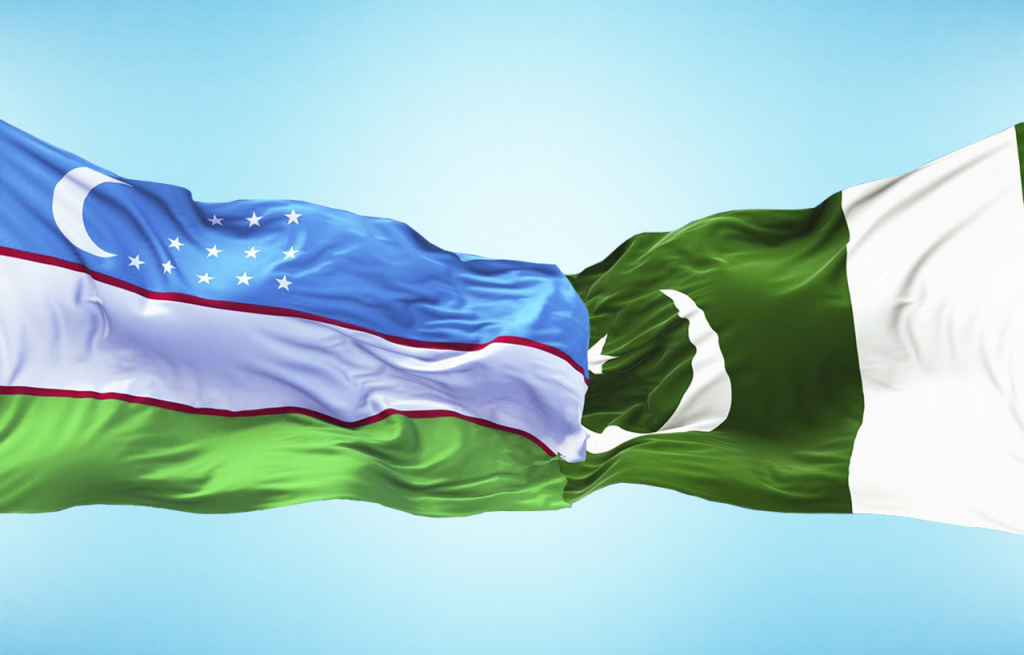
In February 2026, a state visit by the President of the Republic of Uzbekistan, Shavkat Mirziyoyev, to the Islamic Republic of Pakistan will take place, aiming to become a defining stage in the development of the strategic partnership between the two countries.
The upcoming high-level talks will be held against the backdrop of unprecedented intensification of bilateral political dialogue and are aimed at the practical implementation of a key economic objective: increasing the volume of mutual trade to $2 billion in the coming years. The central element of the agenda will be the structural transformation of economic cooperation: the parties intend to move from a model of simple trade in goods to the formation of sustainable industrial cooperation chains, the establishment of joint high-tech production facilities, and the systematic removal of tariff barriers within the framework of an expanded Preferential Trade Agreement.
Growth dynamics and strategic priorities
An analysis of current macroeconomic indicators indicates a steady, positive trend in bilateral cooperation. By the end of 2024, trade turnover between Uzbekistan and Pakistan amounted to $404 million. The growth trend not only continued but also strengthened in 2025: from January to November, the volume of mutual trade reached $434.4 million, 16.9 percent higher than in the same period of the previous year. Compared with the figures for January-November 2023 ($356.0 million), the increase amounted to 22.0 percent, confirming the resilience of trade and economic ties to external volatility.
Despite steady progress, the parties acknowledge that the current figures do not reflect the true economic and resource potential of the two countries. During high-level negotiations, the leaders defined clear target benchmarks (KPIs) for the governments’ economic blocs. The immediate tactical objective is to increase mutual trade to $1 billion in the short term.
As a strategic medium-term goal, a target of $2 billion has been approved. To achieve such multiple growth, based on the positions of the diplomatic agencies and relevant ministries, a qualitative revision of the trade balance structure is required. The simple exchange of raw materials has exhausted its growth potential – the implementation of the ambitious agenda calls for a transition to deep cooperation and the systematic removal of tariff barriers that restrict market access.
Liberalization instruments and digital integration
To implement ambitious plans to increase trade turnover significantly, the governments of Uzbekistan and Pakistan are focusing on creating a favorable legal and technical trade regime. The foundation for expanding volumes is the Preferential Trade Agreement (PTA), signed in March 2022. At present, the relevant agencies of both countries are actively working to revise the terms of the agreement with a view to scaling it up. The parties intend to substantially expand the range of goods covered by the preferential customs regime, with plans to increase the list from 17 to 100. It is expected that the formalization of agreements on the expanded PTA format will take place in the near future, providing a direct incentive for exporters.
In parallel with tariff liberalization, mechanisms for the digital administration of cargo flows are being introduced. A key infrastructural solution will be the launch of an Electronic Data Interchange (EDI) system between the customs services of Uzbekistan and Pakistan. The technical teams on both sides are already working to operationalize this system, which will ensure the real-time exchange of cargo information. The digitalization of documentation aims to eliminate the need for physical verification, minimize bureaucratic delays at borders, and enhance the predictability of delivery times.
A significant element of the agenda is the systematic removal of non-tariff barriers, which often constrain trade more than duties. During government-level negotiations, measures were agreed upon to unify standards and harmonize sanitary, phytosanitary, and quarantine requirements. The standardization of documentation and inspection protocols will create conditions for accelerated clearance of agricultural products and light industrial goods, thereby reducing operational and logistical costs for businesses.
Financial infrastructure is the backbone of trade
A critical prerequisite for the sustainable growth of trade turnover and the transition to more complex forms of economic cooperation is the establishment of reliable settlement mechanisms. For a long time, the lack of direct interbank channels and the complexity of conducting transactions remained significant constraints for businesses, forcing entrepreneurs to use third-country jurisdictions.
A breakthrough in addressing this systemic issue will be the opening of a branch of the National Bank of Pakistan (NBP) in Uzbekistan. According to Alisher Duschanov, Trade and Economic Counsellor at the Embassy of Uzbekistan, the branch is scheduled to become fully operational in 2026. The emergence of an institutional financial player of this level will not only legitimize and expedite payments but also create a platform for trade financing of export-import operations.
Preparations for this step have been carried out systematically. In April 2025, a delegation from the Central Bank of Uzbekistan, together with representatives of the country’s leading commercial banks, visited Karachi to hold negotiations with the State Bank of Pakistan (SBP) and key financial institutions, including HBL, Meezan Bank, and Bank Al-Habib. The parties thoroughly addressed the issues of opening correspondent accounts and harmonizing compliance control procedures. The integration of banking systems will enable small and medium-sized businesses to minimize transaction costs and currency risks, which is a necessary condition for achieving the declared trade volumes.
Sectoral drivers: a course toward deep processing
The economic agenda of the visit goes beyond trade in raw materials, focusing on industrial cooperation and value chain creation. The textile industry serves as the flagship of this process. Uzbekistan, which is implementing a strategy to deepen cotton fiber processing, has set an ambitious goal of attracting $2 billion in foreign investment into the sector to modernize capacities and expand export potential.
Pakistani companies, with their significant experience in garment manufacturing and the global marketing of textile products, are viewed as strategic partners. During meetings with representatives of the All Pakistan Textile Mills Association (APTMA), Uzbekistan’s Ambassador Alisher Tukhtayev emphasized that combining Uzbekistan’s low-cost energy resources and raw materials with Pakistan’s technologies would enable the production of competitive goods for third-country markets. At present, 130 joint ventures with Pakistani capital are already operating in Uzbekistan.
The second strategic area is pharmaceuticals. Given that the annual volume of pharmaceutical imports into Uzbekistan amounts to approximately $3 billion, the localization of production is becoming a priority of state policy. Pakistani investors are showing strong interest in establishing production facilities in specialized zones, such as the innovative scientific and industrial pharmaceutical cluster Tashkent Pharma Park.
Successful cases are already being implemented: Novugen Pharma has launched production in the country, and during recent business forums, memorandums of cooperation were signed with Bio Labs and Caraway Pharmaceuticals. Investors are provided with tax incentives and exemptions from customs duties on the import of equipment and raw materials, making entry into the Uzbek market economically attractive.
The potential for cooperation also extends to other high-tech sectors. In the leather and footwear industry, projects are being developed to process leather raw materials and produce high-value finished goods for export. In the mining sector, negotiations are underway to develop copper deposits: a Pakistani delegation has already visited the Almalyk Mining and Metallurgical Complex (AMMC) to assess the prospects for a technological partnership. In addition, the parties intend to expand cooperation in the production of agricultural machinery and electrical equipment, using the industrial zones of both countries as a springboard for entering the markets of the CIS and South Asia.
Agro-industrial cooperation: complementarity and technology transfer
The agricultural sector demonstrates strong complementarity between Uzbekistan and Pakistan, providing a natural foundation for balanced bilateral trade growth. Pakistan has established itself as one of the key export markets for Uzbek fruit and vegetable products: according to data for January 2025, this country accounted for 19.5 percent of Uzbekistan’s total fruit and vegetable exports. The Uzbek side intends to increase the supply of fresh produce, legumes, and processed food products, leveraging the region’s transit potential.
Reciprocal trade flows are being formed through the import of in-demand food items, including tropical fruits. In January 2026, in Islamabad, a delegation of the Ministry of Agriculture of Uzbekistan held a series of negotiations with leaders of Pakistan’s private sector. In particular, logistical routes and delivery volumes of Pakistani mangoes and mandarins to the Uzbek market were discussed in detail with OFood’s leadership. At the same time, negotiations are underway with Sindhu United Links Exports (Pvt.) Ltd. on the processing and packaging of potatoes and “1121 Sella” rice for subsequent export to Uzbekistan and the CIS countries. Details of chilled meat supplies in compliance with sanitary standards are also being worked out in cooperation with Fauji Meat Ltd.
Cooperation extends beyond trade operations, encompassing agricultural science and innovation. During the Uzbekistan delegation’s visit to Islamabad, an agreement was reached to develop and sign a Memorandum of Understanding between the Ministry of Agriculture of the Republic of Uzbekistan and the Pakistan Agricultural Research Council (PARC). The document is intended to systematize joint work in seed production, breeding, and the introduction of advanced agricultural technologies.
Scientific and technical partnership is already being discussed at the level of specific projects. With the Pakistani company Watercon, aspects of cooperation are being explored, including the cultivation of seed potatoes using aeroponic and in-vitro methods, the introduction of frost-resistant olive varieties, and the creation of oil-processing infrastructure. A separate area will be the exchange of experience in livestock farming: the parties intend to cooperate in adapting high-yield goat breeds (with milk production of up to 10 liters per day) to the climatic conditions of Uzbekistan.
From intentions to systemic integration
The upcoming state visit of the President of Uzbekistan to Pakistan marks the completion of the stage of building political trust and the transition to a phase of rigorous economic pragmatism. An analysis of the current agenda shows that the economic diplomacy of Tashkent and Islamabad is shifting its focus from declarative statements to the creation of fundamental infrastructure, both physical and financial.
The strategic backbone of this process is the Trans-Afghan railway project. Its implementation, which has moved to the feasibility study stage, is viewed by the parties not merely as a transport route but as an instrument for the geo-economic transformation of the region. The creation of direct railway access to the ports of Karachi and Gwadar will enable Uzbekistan to overcome its landlocked status, reducing transport costs and delivery times severalfold. For Pakistan, this corridor opens access to the markets of Central Asia and the CIS, turning the country into a key transit hub of Eurasia.
The practical implementation of a package of agreements – from expanding the Preferential Trade Agreement (PTA) to launching joint industrial projects in the textile and pharmaceutical sectors – will lay the foundation for institutionalizing relations. A key political outcome of this process will be the launch of the Supreme Council of Strategic Partnership, with its first meeting scheduled for 2026. This new engagement format, formalized in high-level protocols, will enable bilateral dialogue to be placed on a footing of systematic coordination, ensuring the monitoring of agreement implementation and a prompt response to changes in the global environment.
Thus, the cooperation between Uzbekistan and Pakistan is being transformed into a sustainable model of regional partnership, where economic benefits are reinforced by developed infrastructure and the political will of the leaders of both countries. Courtesy: UzA