
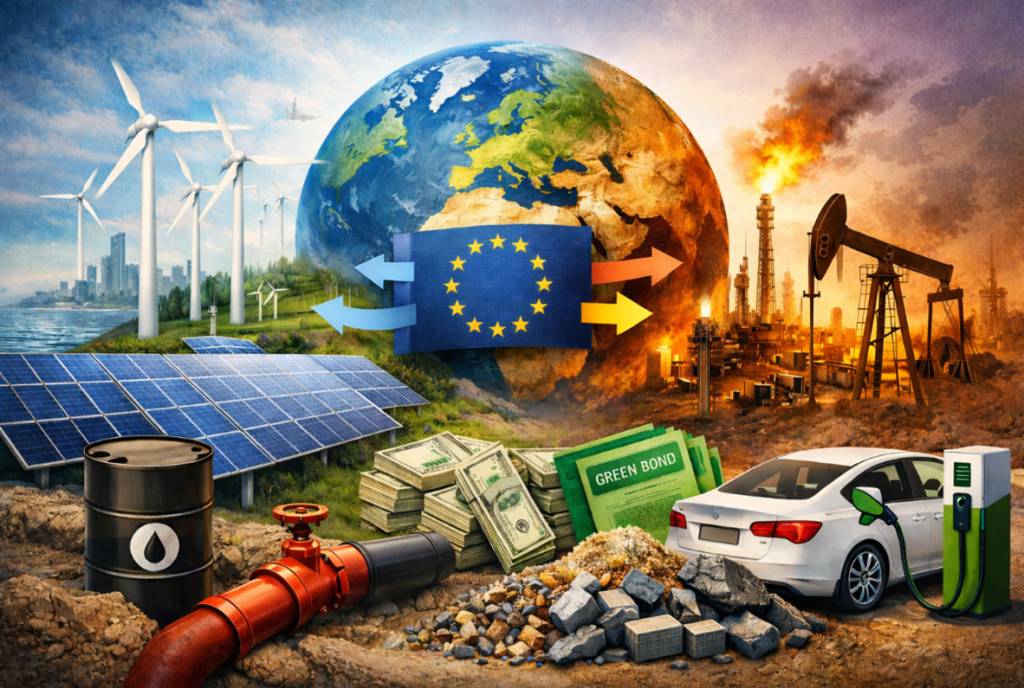
WNAM REPORT: In the international system, the energy factor is recognized as one of the main determinants of a state’s political independence, economic stability, and external capabilities.
Amid climate change, intensified competition for resources, and growing geopolitical contradictions, the transition to renewable energy sources is emerging not only as an environmental necessity but also as a strategic imperative. In the European sphere, energy policy has moved to the center of geopolitical calculations.
Energy Security and Political Independence
According to the analysis of expert Ravshan Goziyev, one of the directions firmly established in the global energy landscape is green energy. The use of wind, solar, and biomass energy has become an important trend of the 21st century. This process, along with efforts to ensure environmental sustainability, is having a noticeable impact on the international relations system. The European Union is striving for leadership in this area. Excessive reliance on imports of traditional energy sources, particularly oil and gas, is increasingly creating geopolitical risks for many states. Until recently, the reliance of most countries on the old continent on Russian gas turned the energy issue into an instrument of political pressure. The REPowerEU program, announced by the European Commission in 2022, is specifically aimed at reducing this dependence. Such a strategy envisages diversifying energy sources, increasing the share of renewable energy, and expanding domestic production. As a result, energy security is strengthened, and an independent foreign policy position is formed.
Climate Policy and Geopolitical Influence
Green energy is an integral part of global climate diplomacy. Through the Green Deal and Fit for 55 strategies, the EU aims to reduce greenhouse gas emissions by 55 percent by 2030. This initiative is not limited to environmental goals, as it also serves to expand geopolitical influence.
By exercising leadership in climate policy, Europe encourages other major economies to pursue a green transformation. Carbon trading mechanisms, technology transfer, and environmental standards are becoming new instruments of international trade and diplomacy. The issue of energy and ecology is not only a matter of domestic policy but also an important area of global negotiations.
Technological Competition and Strategic Advantage
Solar panels, wind turbines, and energy storage systems form the core of global competition. Through technological leadership, Europe not only gains economic benefits but also expands its sphere of strategic influence. Germany and Denmark, through the export of wind energy technologies, have developed a style of technological diplomacy. This provides an opportunity to shape energy policy in line with their interests. At the same time, the green transformation also creates new geopolitical dependencies. The main reserves of key minerals, such as lithium and cobalt, which are necessary for electric vehicles and energy storage systems, are located in Africa and Asia. For this reason, Europe is compelled to deepen cooperation with these regions. Consequently, while energy independence is strengthening on the one hand, new strategic links are being formed in the raw materials supply chain on the other.
Economic Stability and Financial Instruments
Investments directed toward green energy are becoming an important driver of economic growth in Europe. Capital investments planned for the coming years, totaling one trillion euros, will contribute to job creation by modernizing the domestic industry. In addition, the use of green bonds and environmental lending is strengthening Europe’s influence in the international financial arena.
Through financial instruments, other states are being drawn into the green transformation. As a result, energy diplomacy is being shaped not only around oil and gas but also around technologies, investments, and carbon standards.
Traditional Resources and Real Balance
Green energy cannot fully replace traditional sources in practice. Oil and gas will remain an important part of the global energy system in the short- and medium-term. This means that global energy development is still evolving in a mixed manner, balancing traditional and renewable sources.
For Europe, green energy represents not only an environmental initiative but also a large-scale geopolitical strategy. Strengthening energy security, leadership in climate diplomacy, technological superiority, and economic stability form the foundation for reinforcing the region’s position on the global stage.
Thus, renewable energy sources are becoming a key instrument of modern international relations, going beyond the boundaries of a conventional economic sector. Given that green energy serves as the foundation of global technological transformation, this sector will undoubtedly become a decisive factor of strategic advantage in the future.