
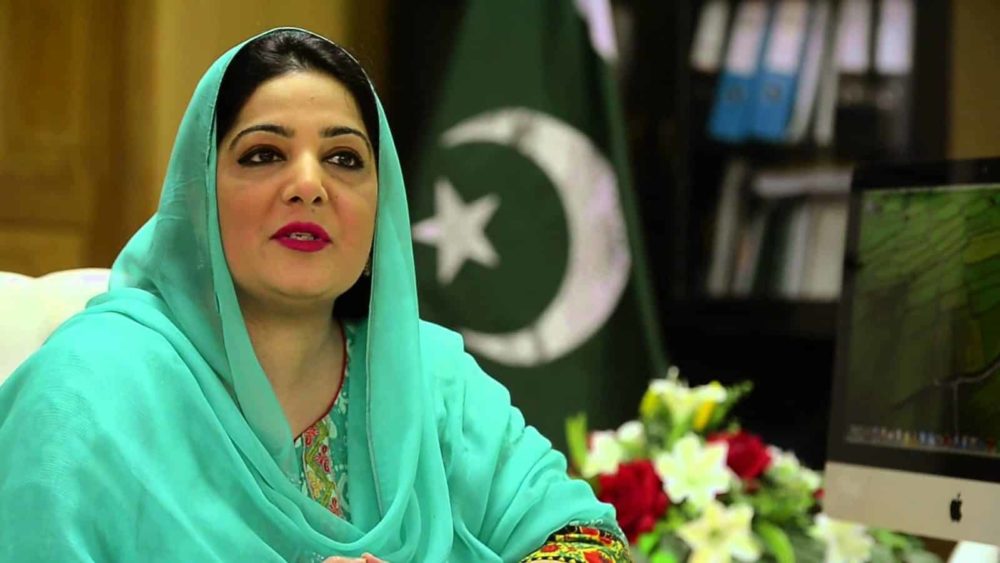
Lahore: Pakistan must urgently modernise its regulatory frameworks while investing in connectivity infrastructure, including satellite internet, to unlock the full potential of artificial intelligence, blockchain and digital finance, Senator Anusha Rahman Khan said at the Leadership Summit on Blockchain and Digital Assets hosted by the LUMS Centre for Digital Assets Research (CeDAR).
The summit, which brought together policymakers, financial leaders and technology experts, featured Senator Rahman as the chief guest alongside Waqar Qureshi, Director General (IT Solutions), Punjab Information Technology Board (PITB).
Delivering the keynote address, the former IT minister underscored that while Pakistan has entered the era of frontier technologies, “the governance frameworks are still being written,” making this a decisive moment for policymakers. She said the Punjab government is working to finalise forward-looking policy frameworks within the next three to five years to shape the province’s digital trajectory for the coming decade.
Highlighting connectivity as the “single biggest barrier” to digital inclusion, she announced plans to introduce satellite-based high-speed internet across Punjab, aiming to connect underserved and unserved regions. “In the absence of reliable and affordable internet, we would be talking only in the air,” she said, adding that the initiative would enable deployment of AI and other technologies at scale.
She also stressed that blockchain would serve as a “governance instrument” to build trust, describing it as a decentralised, tamper-resistant system capable of transforming public service delivery and financial transparency. “Trust and data together will change how we look at our country,” she noted, linking blockchain adoption with a more accountable and auditable economic system.
Outlining the province’s digital roadmap, Ms Rahman said Punjab plans to establish specialised AI and blockchain-focused incubators in Lahore, Faisalabad and Sahiwal, alongside an ambitious skills programme targeting six million young people, including women, over the next four years. She emphasised that the goal is not just startups that scale abroad, but “solutions that solve problems for 140 million people in Punjab.”
On the evolution of digital finance, she argued that a cashless economy is more than convenience, calling it a structural shift that generates data for credit access, tax compliance and targeted subsidies. “It is the foundation of transparency that attracts serious investment,” she said.
A high-level panel discussion on AI, blockchain and digital assets featured prominent industry leaders, including Faisal Ejaz Khan, Chief Information Officer at Bank of Punjab; Muhammad Zaman, Group Head Digital Transformation & Innovation at Allied Bank; Faisal Aftab, Founder and Managing Partner at Zayn VC; Humza Khan, Country Growth Manager at Binance; and Afaqe Riaz Ahmed, Founder and CEO of Higgs Computing Limited. Panelists highlighted how the convergence of AI and blockchain is reshaping financial systems, while stressing the importance of regulatory clarity and innovation-friendly policies.
Another session on digital payments and financial inclusion brought together key stakeholders, including Hamayun Sajjad, CEO of Mashreq Bank; Muhammad Kamran Zeb, Group Head Digital Sales, Acquiring & Alliances at Allied Bank; Sharjeel Murtaza, Chief Digital Officer at Karandaaz Pakistan; Adnan Aslam, Co-founder and CEO of DigiKhata; Mahmood Shamsher Ali, CEO of Alif (BNPL); Atta ur Rehman from JazzCash; and Francisco Javier Fernandez, Head of Partnerships at Fuze Finance. Speakers emphasised that accelerating digital payments is essential for financial inclusion, economic documentation and transparency in Pakistan.
Across sessions, experts agreed that while Pakistan has made notable progress in fintech adoption, scaling a truly inclusive digital economy will require sustained regulatory support, robust infrastructure and stronger consumer trust.
The summit concluded with a consensus that AI, blockchain and digital financial systems, underpinned by clear policy direction and universal connectivity, will define Pakistan’s economic future.