
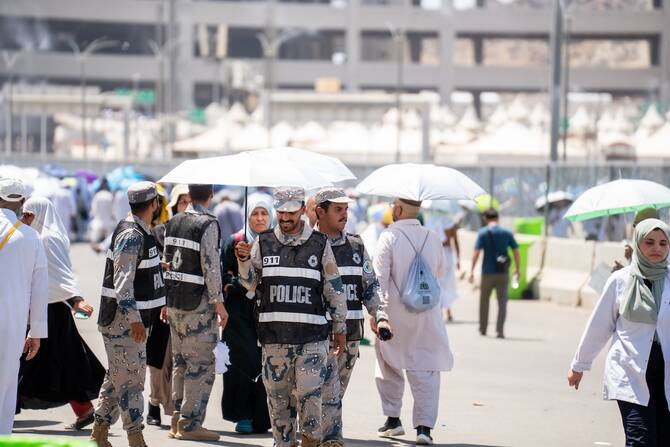
RIYADH ( WNAM MONITORING): With the 2026 Hajj season now over and pilgrims leaving Makkah, Mina, Arafat and Muzdalifah, Saudi authorities have begun a major operation: dismantling temporary facilities, maintaining infrastructure and preparing the holy sites for next year’s pilgrimage.
According to official statistics, 1,707,301 pilgrims performed Hajj in 2026, up 2.04 percent from 2025. Of the total, 1,546,655 arrived from outside the Kingdom, including 1,485,729 who traveled by air, while 160,646 were citizens or residents of Saudi Arabia.
In Mina, temporary facilities are inspected, repaired, dismantled, or stored for reuse. Roads are cleared, cooling systems are serviced, and emergency equipment is returned to regional facilities after technical inspections.
According to T.J., a representative of the Saudi Red Crescent Authority, the authority begins operational closure procedures immediately after the pilgrimage ends.
“After the end of the Hajj season, the Saudi Red Crescent Authority begins carrying out the operational closure of seasonal emergency facilities and preparing them for upcoming seasons, according to organized plans that ensure maintaining readiness and making the best use of resources,” the representative told Arab News.
The authority operates two types of emergency centers during Hajj: permanent steel-structured facilities; and temporary units made up of tents and portable cabins. Permanent centers are secured and closed after the season, while temporary structures are dismantled and transferred to warehouses for future use.
“With regard to medical and emergency equipment and devices, the resources participating in the season are inventoried and withdrawn from various regions after undergoing the necessary technical inspections,” the representative said.
The equipment is inspected again upon arrival in Makkah to ensure operational readiness and verify the availability of spare parts and medical consumables.
The authority also coordinates with maintenance companies and technical support teams to handle repairs and equipment servicing throughout the year. Workshops and training sessions improve staff readiness and ensure proper use of emergency equipment.
Post-Hajj operations include inspections of roads, tunnels, water systems, electricity networks, and cooling infrastructure affected by the high operational demand during the season.
Authorities said this year’s Hajj season concluded with the holy sites in full operational readiness as a result of continuous maintenance and infrastructure work throughout the year.
Kidana Development Co., the executive arm of the Royal Commission for Makkah City and Holy Sites, begins a new operational phase immediately after Hajj, focused on inspection, maintenance, rehabilitation, and infrastructure assessment in preparation for the following season.
The process starts with comprehensive inspections on two levels. The first focuses on permanent infrastructure such as electricity and water networks, where technical teams assess any damage caused by the intense operational pressure of the Hajj season while continuing routine maintenance programs.
The second level focuses on temporary facilities and operational assets, which are classified according to their condition. Some are repaired and rehabilitated for reuse during the next Hajj season, others are securely stored, while damaged assets are replaced entirely with newer and more efficient alternatives.
Kidana manages maintenance operations through an integrated cycle consisting of four stages: Hajj operations, post-season maintenance, preventive maintenance, and operational preparation for the upcoming season.
The post-Hajj period is considered one of the most demanding phases due to the need to restore thousands of assets spread over vast areas within a limited timeframe while simultaneously carrying out new development projects at the holy sites.
The company also relies on operational observations and reports collected from service providers during Hajj to improve future planning and infrastructure upgrades. The data is used to make direct operational improvements aimed at enhancing efficiency and improving services for future pilgrims.
Transport systems undergo maintenance as well. Buses used to transport pilgrims are serviced and returned to operators, while Al-Mashaaer Al-Mugaddassah Metro undergoes technical inspections before entering standby mode until the next Hajj season.
Authorities also review operational data collected during Hajj, including crowd movement, transportation efficiency, emergency response times, and heat mitigation measures. The findings are used to improve planning and infrastructure for future seasons as Saudi Arabia expands pilgrimage capacity under Vision 2030.
Waste management is one of the largest post-Hajj challenges. According to Sultan Al-Harthi, spokesperson for the National Center for Waste Management, the pilgrimage generates several types of waste, including municipal solid waste, healthcare waste, slaughterhouse waste, and waste from the Adahi project.
“The Hajj season generates various types of waste due to the large number of pilgrims and the wide range of services provided across the holy sites,” Al-Harthi told Arab News. “Each type of waste is handled through a designated pathway to ensure proper treatment, safe disposal, and reduced environmental impact.”
Municipal waste is transferred to Al-Akayshiyah landfill. Healthcare waste from hospitals and clinics is transported to specialized treatment facilities outside Makkah.
Slaughterhouse waste is disposed of at designated treatment sites, while waste generated by the Saudi Project for Utilization of Hady and Adahi is processed at the Fajj Al-Haraman landfill.
Al-Harthi said the biggest challenge is the sharp increase in waste generated over a short period. He also cited noncompliance by some service providers and the limited number of specialized private-sector waste management companies.
“These challenges require a high level of coordination among relevant authorities, improved compliance, and greater empowerment of specialized private-sector companies to contribute to more sustainable solutions,” he said.
The post-Hajj period has become a critical phase in preparing the holy sites for future pilgrims, with maintenance, inspections, operational reviews, and infrastructure upgrades continuing throughout the year.