
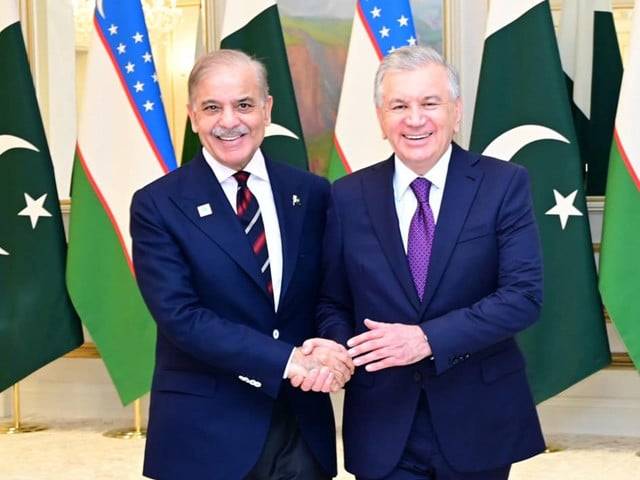
For the most of the post-Cold War period, the relations between Pakistan and Uzbekistan can be characterized as cordial: high in rhetoric yet thin in policy substance. High-level visits usually produced optimistic declarations, memorandums of understanding accumulated on paper, and trade cooperation promises were reinstated several times. But over decades these ties never led to any substantial economic integration or even long-term strategic coordination. However, an increased, though minor shift can be felt in recent times. Either this revived energy will herald the beginning of a truly strategic alliance, or another series of empty rhetoric just like before.
The constraints in the Pakistan-Uzbekistan relations in the past were not because of political mistrust, but were rooted in the structural constraints. The geographic isolation of Uzbekistan, lack of infrastructural connectivity to South Asia, the instability of Afghanistan, and even the domestic economic difficulties of Pakistan, preconditioned the ambitious cooperation with challenges. This kept bilateral interactions limited to diplomatic formalities and small-scale cultural exchange with negligible trade volume as compared to the potential of both countries.
The difference between the current phase is the increasingly converged strategic interest, other than the ceremonial goodwill. The broader foreign policy re-calibration in Uzbekistan has been done since the mid-2010s with the focus put on regional connectivity, economic openness, and diversified alliances. With an economically strained situation and in need of rebranding as a regional trade and transit hub, Pakistan is finding Central Asia a logical extension of its geoeconomic policies. This convergence has formed practical motives whereby there were mostly political courtesies in the past.
Connectivity is the core in this new relation. The two states understand that economic sustainability in Eurasia can be achieved not just by having the old power blocs, but by the presence of infrastructures that can connect markets between regions. In the case of Uzbekistan, warm-water present an avenue to international business sectors that are not restricted to Russian and Chinese trade routes. In the case of Pakistan, the overland routes to Central Asia provide new export markets, energy cooperation and strategic relevance as a transit state. The increased emphasis on transport corridors across Afghanistan, despite the constant security pressures, is an indication of a common ideology that economic integration is ultimately a stabilizing process as opposed to a product of stability.
Even trade and investment cooperation has started planning instead of just aspirations. The establishment of joint business councils and sector specific agreements in textile, pharmaceutical, agricultural, and construction sectors, discussion of preferential trade arrangements are all signaling to an institutionalization of economic interaction. The numbers are still below potential, but the focus on functional business processes implies an understanding that the phenomenon of diplomatic warmness needs to be pegged on a market reality to survive.
Another aspect of this strengthening of relations is security cooperation. The issues of shared concern between Pakistan and Uzbekistan are the militant networks, border instability, and spillover effects of the insecurity in Afghanistan. Compared to the past, where security engagement was intermittent, the recent years have witnessed dialogue, military interactions, and counterterrorism synchronization. This is an indication of an emerging realization that regional stability cannot be outsourced to the great powers but rather shared among the neighboring states with direct interests in the outcomes.
However, the shift between symbolic and strategic partnership is not so predictable. There are numerous obstacles that pose a threat to stagnation or derail progress. Many connectivity ambitions will not work without steady stability in Afghanistan, and infrastructural development there. Pakistan is economically weak and this restricts its ability to fund large-scale projects, and Uzbekistan is always walking a fine line to ensure that it does not become over reliant on a specific corridor or partner.
Moreover, it will be important to translate political enthusiasm into confidence in the private sector. Companies are still worried about security threats, regulatory hurdles, and logistical bottlenecks. Without plausible dispute-resolution structures, no reliable transport systems, and no facilitation of financial flows, high-level arrangements will again fail to bring into existence actual economic flows. The relationships between strategic partners are not built on summits, as such, but on a long-term commercial activity that brings interdependency.
The broader geopolitical environment also has to be taken into account. Russian, Chinese, Turkish and Western interests are converging in Central Asia and are increasingly becoming important. The increasing interaction of Uzbekistan and Pakistan would have to maneuver through this congested area without being interpreted of belonging to any exclusive block. So far, the bilateral strategy has been more pragmatic, not ideological, focused on: connectivity, trade, and regional ownership, which makes it sustainable. The geopolitical backlash will largely depend on holding this non-aligned interest-based position.
In spite of these challenges, the present trend is sufficiently different to the previous phases of engagement. The cooperation is no longer largely based on diplomatic rhetoric, or unity between two Muslim majority states. Rather it is based on common economic rationale, regional connectivity imperatives, and the convergence of security interests. It is this change of sentiment to strategy that is the change that makes relationships episodic into enduring relationships.
Whether the relations between Pakistan and Uzbekistan have become a strategic partnership or not will depend on the adherence to the policies. The infrastructure projects should go beyond the feasibility studies, trade frameworks must reduce real transaction costs, and security cooperation should be institutionalized, not driven by personalities. Things will not change immediately, but gradual integration is already transforming the bilateral scene.
In many ways, this new relationship represents a larger shift in Eurasian diplomacy, no longer reliance on the great powers, but a regional approach to addressing problems by connectivity and economic interdependence. If sustained, Uzbekistan and Pakistan would become significant middle-power actors with a hand in South and Central Asia.
For the first time in decades, their relationship seems to be built on strategic need and not on diplomatic customs. The next few years will see whether this trend is sustainable enough to create structural change, or whether it will evolve into the second round of untapped potential. However, there is one thing that is now certain: the symbolic diplomacy does not only rule the relations between Pakistan and Uzbekistan anymore, and that, in its turn, is a great change.
( Opinions expressed in this article are the author’s own and do not necessarily reflect the editorial policy of WNAM)