
WNAM REPORT: Resolution No. 26-NQ/TW, dated August 22, 2026, on developing tourism into a spearhead economic sector in the new era, sets ambitious targets for Vietnam’s tourism industry while outlining a new approach to organising tourism growth.
By 2030, tourism is expected to contribute 10-12% directly to GDP, with Vietnam welcoming 45-50 million international visitors and serving 160 million domestic tourists. Greater emphasis will be placed on high-spending and long-stay visitors, with total tourism revenue targeted at 80-90 billion USD. By 2045, Vietnam aims to rank among the world’s 30 most competitive tourism destinations.
A notable feature of the resolution is its focus on developing three major tourism growth poles – Hanoi, Ho Chi Minh City and Da Nang – while gradually turning Phu Quoc into a new growth pole. It also calls for the development of 10 key tourism centres and 20 national tourism areas.
The approach seeks to move beyond fragmented infrastructure investment and isolated local development towards an interconnected tourism ecosystem with internationally competitive centres and growth poles.
International gateways are to be linked with tourism centres through multimodal transport networks, including aviation, expressways, railways and seaports. Strategic investors will be encouraged to develop cultural, sports and entertainment complexes, shopping facilities, high-end resorts, healthcare services and destinations capable of operating around the clock.
Hanoi, Ho Chi Minh City and Da Nang are positioned to serve as leading tourism hubs for their respective regions. Hanoi can leverage its cultural heritage, cuisine and international air connectivity to link with destinations such as Ninh Binh, Quang Ninh and the northern mountainous provinces. Ho Chi Minh City, with its large tourism and service market, international connectivity, MICE activities, entertainment and night-time economy, can serve as a gateway to the southeastern region, the Mekong Delta and coastal and island destinations.
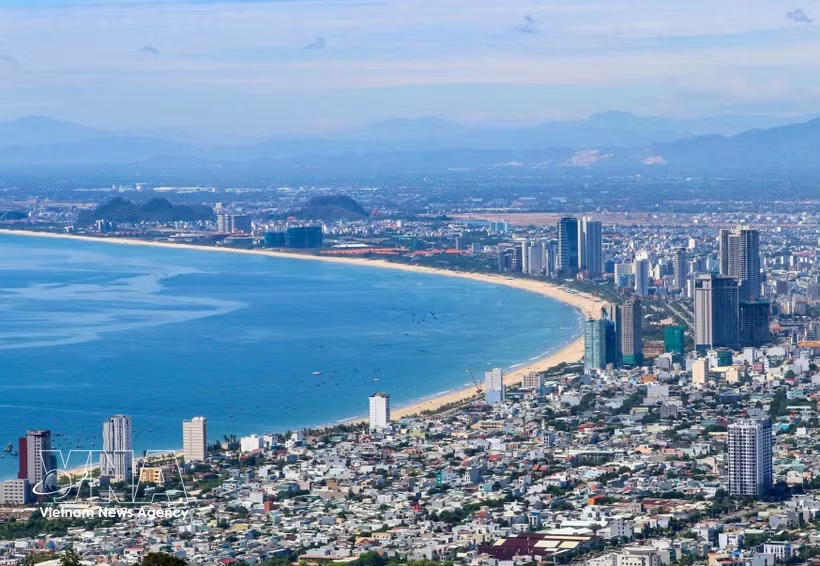
Da Nang has established itself as a tourism centre in central Vietnam, combining beach resorts, events and MICE tourism with its proximity to major heritage destinations such as Hue and Hoi An.
Meanwhile, Resolution No. 26 calls for Phu Quoc to gradually become a new growth pole, focusing on high-end island tourism and international events.
According to Dr. Chung Le Khang, a lecturer at Ho Chi Minh City University of Education, the key change lies in shifting from each locality competing for visitors to developing strong centres capable of driving regional growth. A growth pole should be assessed not only by visitor numbers but also by connectivity, spending, length of stay, repeat visits and its ability to spread tourism opportunities to neighbouring areas.
Assoc. Prof. Dr. Nguyen Duc Thang, Vice Rector and Dean of the Faculty of Tourism at East Asia University of Technology, said growth poles should function both as magnets attracting visitors and as gateways distributing tourist flows across their regions. Strong infrastructure, connectivity, services and destination branding are therefore essential.
The development of these growth poles is ultimately aimed not at a race for visitor numbers, but at enhancing the quality, added value and international competitiveness of Vietnam’s tourism industry.