
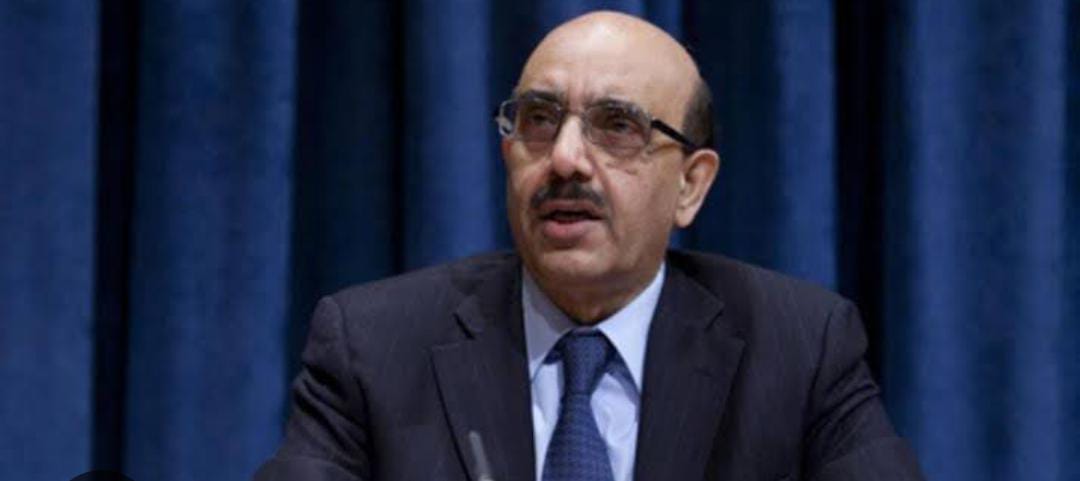
WNAM REPORT: Former President of Azad Jammu and Kashmir and former Ambassador of Pakistan to the United States and the United Nations, Masood Khan, has said that Pakistan is playing a leading diplomatic role to prevent a devastating regional conflict between the United States and Iran, warning that failure of ongoing mediation efforts could plunge the Middle East into prolonged instability and economic turmoil.
Speaking during a television interview on the rapidly evolving Iran-US crisis, Ambassador Masood Khan described the current environment as “extremely fluid,” noting that contradictory statements from various capitals have complicated diplomatic efforts despite reports suggesting that a memorandum aimed at ending the conflict may already be under discussion.
Ambassador Masood Khan stated that countries including Egypt, Turkey, Saudi Arabia, and Pakistan are actively engaged in mediation efforts, adding that Pakistan has assumed a central role in facilitating communication between Tehran and Washington. He noted that Islamabad’s diplomatic outreach and shuttle diplomacy continue at an intense pace, with senior Pakistani leadership remaining deeply involved in efforts to secure de-escalation and dialogue.
Highlighting the complexity of the negotiations, Ambassador Masood Khan said that one of the most difficult hurdles remains the future status of the Strait of Hormuz. He observed that Iran has adopted a firm position regarding control and security arrangements in the strategically vital waterway, further complicating efforts to achieve a comprehensive settlement.
He further stated that inflammatory rhetoric from both sides, particularly aggressive statements emerging from Washington and Tehran, continues to undermine trust and intensify tensions. According to Ambassador Masood Khan, such language creates political pressure on leadership in both countries and increases the risk of miscalculation.
Discussing the nuclear dimension of the crisis, Ambassador Masood Khan explained that Iran maintains its position that uranium enrichment for civilian purposes is its legitimate right under the Treaty on the Non-Proliferation of Nuclear Weapons. He noted, however, that the issue of enrichment levels, stockpiles, sanctions relief, and the duration of any moratorium remain major points of contention in ongoing negotiations.
Ambassador Masood Khan recalled that the 2015 nuclear agreement provided an important framework for diplomacy and suggested that future negotiations may build upon that arrangement with additional guarantees and safeguards acceptable to both sides. He added that meaningful progress would require reciprocal concessions, including relief from economic sanctions and the release of frozen Iranian assets.
Commenting on the broader regional situation, Ambassador Masood Khan strongly criticised Israeli actions in the Middle East, stating that the continued destruction in Gaza Strip and military operations in neighboring territories have severely undermined regional peace and stability. He emphasized that the international community bears responsibility for ensuring respect for international law, the United Nations Charter, and the legitimate rights of the Palestinian people.
Concluding his remarks, Ambassador Masood Khan reiterated that diplomacy, restraint, and constructive engagement remain the only sustainable path forward, stressing that peace in the Middle East is essential not only for the region but for global security and economic stability as well.