
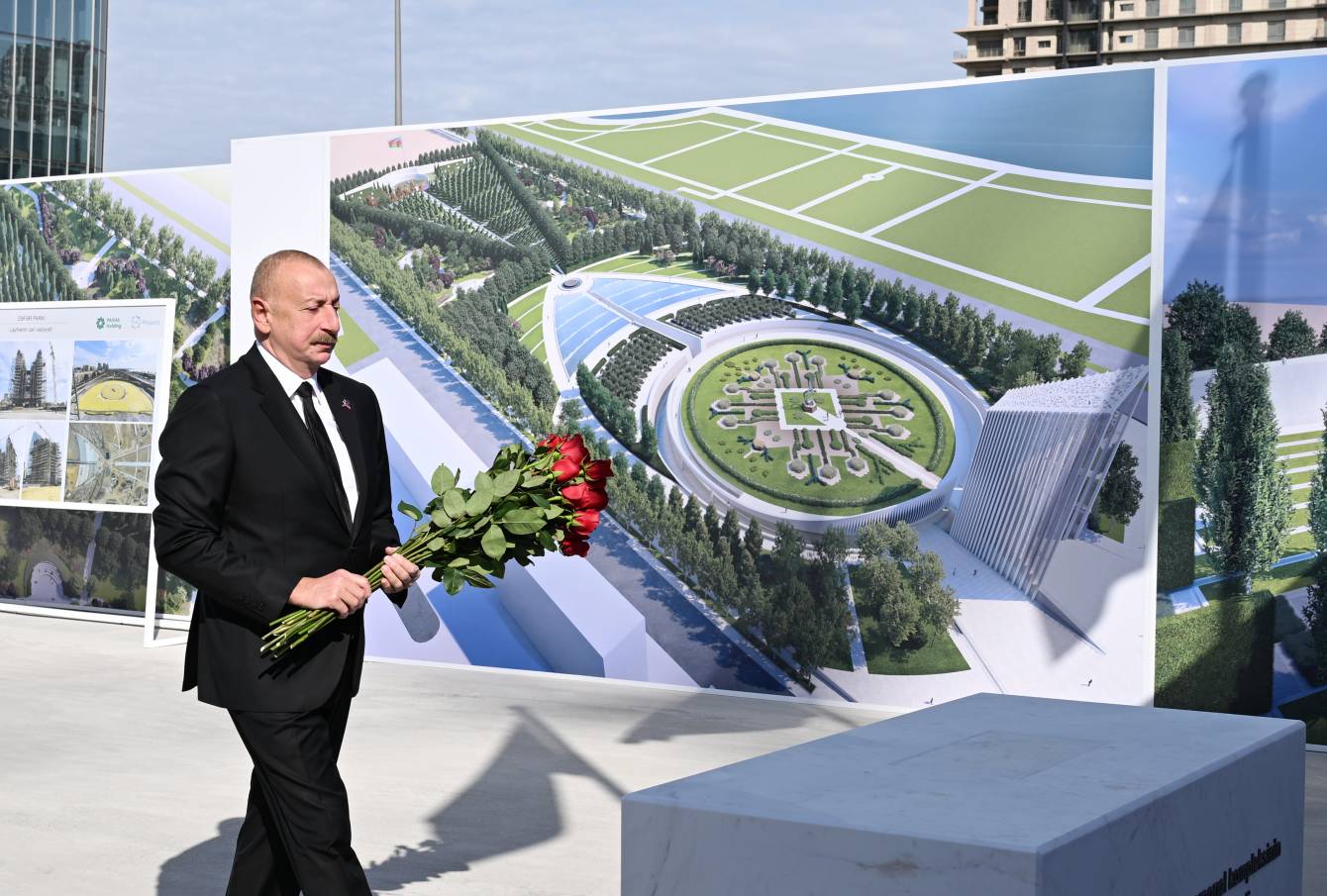
There are dates in the history of nations that transcend the calendar. They become part of a nation’s collective memory—days on which sacrifice is remembered, national resolve is reaffirmed, and the future is viewed through the lessons of the past.
Observed annually as Commemoration Day, September 27 carries profound meaning for the Azerbaijani people. It honours the soldiers and officers who lost their lives defending Azerbaijan’s sovereignty and territorial integrity, while also reminding the world of the price that nations and peoples sometimes pay in their pursuit of peace, security and national dignity. Azerbaijan formally established September 27 as Commemoration Day through a presidential order in December 2020.
For Azerbaijan, the significance of this day is inseparable from the events that began on September 27, 2020, and the 44-day war that followed. Whatever one’s perspective on the region’s complex history, there is no question that the period profoundly shaped Azerbaijan’s national consciousness and its contemporary political and social landscape.
The Azerbaijani state and people remember those who gave their lives as national heroes, while veterans and their families remain central to the country’s remembrance.
But remembrance is not simply about looking backward.
The true meaning of sacrifice is found in the future it makes possible.
Today, Azerbaijan is undertaking a major programme of reconstruction and redevelopment in territories affected by the conflict. The country’s own official account describes the return of communities, reconstruction of towns and villages, humanitarian demining and broader post-conflict rehabilitation as central elements of this new chapter.
This transformation carries a message of particular relevance to the wider world: the ultimate aspiration after conflict should be a future in which people can live, rebuild, prosper and coexist in peace.
For Pakistan, Azerbaijan’s Commemoration Day has an added emotional resonance. The relationship between Pakistan and Azerbaijan is not merely diplomatic; it is rooted in longstanding goodwill, mutual respect and support on issues of national importance. The two countries established diplomatic relations in 1992, and their partnership has since developed across political, economic, defence, cultural and people-to-people dimensions. Pakistan’s Foreign Ministry describes the relationship as one based on strong historical, cultural and religious affinities.
The friendship has also been strengthened by sustained high-level engagement. During President Ilham Aliyev’s state visit to Pakistan in July 2024, the two countries reaffirmed their strategic partnership and signed a series of agreements and memoranda covering areas including trade, transit, tourism, education, information technology, culture and small and medium enterprises.
These developments demonstrate that the Pakistan-Azerbaijan relationship is increasingly about building the future together—through commerce, connectivity, investment, tourism, education and technology, alongside political understanding.
As someone closely associated with Pakistan’s business and economic community, I believe this dimension deserves particular attention. The friendship between our two countries possesses enormous potential to move beyond traditional diplomatic cooperation towards a more dynamic economic partnership.
Pakistan’s entrepreneurs can find opportunities in Azerbaijan, while Azerbaijani investors and businesses can discover a significant market and strategic gateway in Pakistan.
The two countries have already taken practical steps in this direction, including agreements on preferential and transit trade.
Official Pakistani data also reflects growing tourism and connectivity between the two countries, with approximately 90,000 Pakistani tourists visiting Azerbaijan in 2025.
Baku and Islamabad therefore have an opportunity to turn political goodwill into economic momentum.
Trade corridors, tourism, aviation, energy, agriculture, information technology, construction, logistics and SME cooperation can all become pillars of a stronger bilateral relationship. The private sectors of both countries have an important role to play in translating the warmth between the two peoples into sustainable economic partnerships.
September 27 also offers an opportunity to recognize another important principle: the dignity of a nation is inseparable from the dignity accorded to those who sacrificed for it.
Remembering martyrs is therefore not merely an act of ceremony. It is an expression of a society’s gratitude to those who made the ultimate sacrifice.
Yet remembrance must always be accompanied by a commitment to peace.
Azerbaijan’s official commemoration message in 2025 placed particular emphasis on the importance of advancing the peace agenda as part of honouring the memory of those who died in the conflict.
Across continents and civilizations, the greatest tribute to those lost in conflict is ultimately to build conditions in which future generations do not have to experience the same suffering.
For Azerbaijan, September 27 is thus simultaneously a day of memory, gratitude, national unity and hope.
For Pakistan, it is an occasion to stand with the people of a friendly and brotherly country, to honour the memory of Azerbaijan’s martyrs and to reaffirm our commitment to strengthening the bonds between Islamabad and Baku.
The friendship between Pakistan and Azerbaijan has already demonstrated remarkable resilience. It now deserves an equally ambitious economic and human dimension.
As Azerbaijan remembers its heroes on September 27, the message that resonates beyond its borders is simple yet powerful:
Nations remember their martyrs not only by preserving their memory, but by building a more peaceful, prosperous and dignified future in their name.
And that is perhaps the most enduring tribute of all.